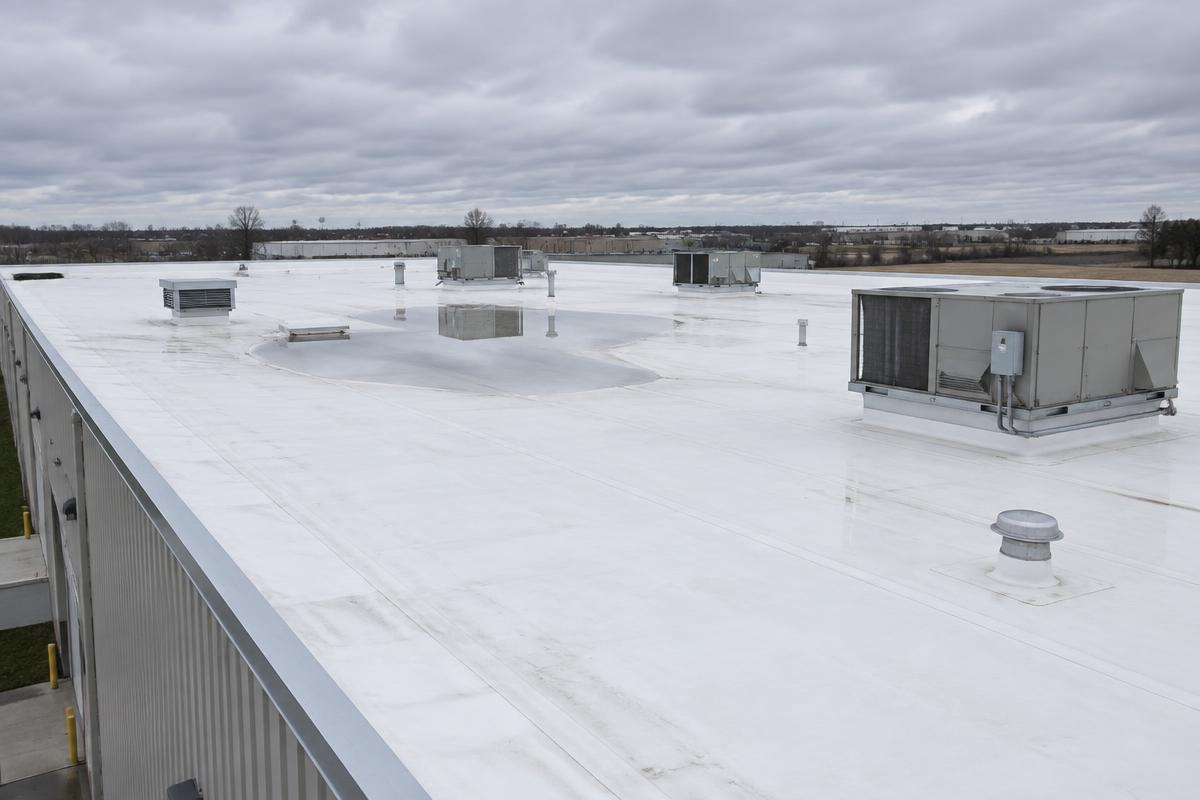
Where it fits
Low-slope areas with foot traffic, older buildings already built for it, and porch roofs.
Trade-offs
Durable and puncture resistant, but seams and laps need careful work. Some installs use torches, so ask about the method used.
What modified bitumen actually is
Modified bitumen is a roll roofing product made from asphalt reinforced with polymers (typically APP or SBS) and a fiberglass or polyester mat, applied in overlapping layers. It is a different product from traditional built-up tar and gravel roofing, though people sometimes use the terms loosely. The polymer modification gives it more flexibility and durability than plain asphalt roll roofing.
How it is installed
Modified bitumen sheets are applied with heat (torch-applied), hot asphalt (mop-applied), cold adhesive, or self-adhered backing, depending on the product and job conditions. Torch-applied systems require careful technique and fire safety precautions, so it is worth asking what application method a roofer plans to use and why.
Modified bitumen versus TPO and EPDM
Compared to single-ply membranes like TPO and EPDM, modified bitumen is heavier, handles foot traffic and punctures very well, and has a long history on porches and small commercial roofs. The trade-off is a more labor-intensive, multi-layer installation and more skill-dependent seam and lap work. Single-ply membranes install faster and offer more reflective color options, but may not match modified bitumen's puncture resistance in high-traffic areas.
Where it fits best
- Low-slope porch roofs and additions on homes
- Small commercial roofs, especially older buildings already built for it
- Roof sections with regular foot traffic or equipment access
- Transition areas between a steep shingle roof and a flat section
What fails first on a modified bitumen roof
Laps and seams are the most common failure point, especially if they were not fully sealed or heated during install. Granule loss on the cap sheet surface, blistering from trapped moisture, and flashing separation at walls or curbs also show up over time. Ponding water that sits for extended periods accelerates wear at any weak seam.
Maintenance and simple upkeep
Keeping the surface clear of debris, checking seams and flashing each season, and addressing small blisters or lifted laps early all extend the roof's service life. A granule-surfaced cap sheet also benefits from avoiding unnecessary foot traffic that can wear the surface thin in one spot.
Lifespan factors, loosely
Modified bitumen roofs are often estimated at somewhere around 15 to 20 years, sometimes longer with a quality install and consistent maintenance. Application method, number of plies, and how much direct sun and ponding the roof experiences all play into that range.
What an inspection checks
An inspection on modified bitumen typically looks at seam and lap adhesion, surface granule condition, flashing at walls and curbs, and any blistering or soft spots that suggest moisture trapped beneath the cap sheet. A flat roof repair visit usually starts with exactly this kind of walk-through before any repair is scoped.
What good modified bitumen workmanship looks like
A well-installed modified bitumen roof has fully fused laps with no visible gaps or fishmouths, consistent asphalt bleed-out at seam edges showing proper heat or adhesive bonding, flashing at walls and curbs tucked and sealed rather than surface-caulked, and a cap sheet surface free of scorch marks or blistering from an uneven torch pass. A roofer should be able to explain which application method is being used and why it fits the building.
Signs of poor modified bitumen workmanship
- Seams or laps that lift at the edge instead of lying flat with consistent bleed-out
- Scorched or burned-through cap sheet from an inconsistent torch pass
- Flashing relying on surface caulk instead of properly tucked and sealed detail work
- Visible blistering shortly after install, suggesting trapped moisture or air
- Ponding water left sitting in low spots without any slope correction discussed
A worked decision example
Picture a small commercial roof with one blistered area near a drain and otherwise sound laps across the rest of the field. A localized cut-and-patch repair at that blister is usually the right scope. Compare that to a roof where multiple laps are lifting across several sections and granule loss is heavy on the cap sheet; that pattern suggests the membrane is wearing broadly, and planning for a larger repair or replacement makes more sense than chasing individual blisters one at a time.
Seasonal timing for modified bitumen work in central Illinois
Torch and hot-asphalt application both perform best in moderate, dry weather, since cold temperatures make the asphalt harder to work and wet conditions interfere with adhesion. Many modified bitumen projects are scheduled in spring or fall for that reason, though cold-adhesive and self-adhered products can sometimes extend the workable season when the job calls for it.
Homeowner and property manager maintenance checklist
- Walk the roof seasonally to check laps, seams, and flashing for lifting or separation
- Clear debris from low spots and drains so water does not pond against a lap
- Watch for blistering, which often signals trapped moisture beneath the cap sheet
- Limit unnecessary foot traffic that can wear the granule surface thin in one area
- Keep a simple record of past patches so a pattern of recurring issues can be spotted early
Mistakes to avoid with modified bitumen
Common mistakes include letting a small blister or lifted lap go unaddressed until it opens into a leak, using an application method not suited to the building (such as torch work near sensitive areas without proper precautions), skipping a granule or surface check after storms, and assuming a thicker roof needs no drainage correction when ponding is already visible.
Common questions
Is modified bitumen the same as tar and gravel?
No. It is a rolled, asphalt-based sheet with added polymers. Tar and gravel is built-up roofing made in layers.
Where is modified bitumen common?
Small commercial buildings, porches, and low-slope sections of homes.
Is torch-applied modified bitumen safe on an occupied building?
It can be, when done by an experienced crew following fire safety precautions, but some buildings or insurers prefer cold-adhesive or self-adhered systems instead. Ask what method is planned and why.
Can modified bitumen be patched like EPDM?
Yes, localized patches are a common repair method, especially for isolated blisters, punctures, or lifted seams, without needing to replace the whole section.
How many layers does a modified bitumen roof usually have?
Systems vary, but many use a base sheet plus a cap sheet, sometimes with additional ply sheets depending on the building and manufacturer specification.
Does modified bitumen need a reflective coating?
Not always, but a coating can reduce surface temperature and may extend life on a sound, aging cap sheet. See [roof coatings](materials/roof-coatings) for when that makes sense.
Can modified bitumen be used on a steep-slope roof?
It is designed for low-slope applications. Steep sections typically use shingles or metal instead.
What causes blistering on a modified bitumen roof?
Blistering usually means air or moisture got trapped between layers during installation or later entered through a small opening. It can weaken the membrane over time and is worth having checked rather than left alone.
Can a modified bitumen roof be repaired without matching the exact original product?
A close match in type and thickness is ideal for consistent performance, but a competent roofer can often use a compatible patch material even if the exact original product is no longer available.
How can I tell if my modified bitumen roof has granule loss that matters?
Light, even granule loss over many years is normal aging. Patchy bald spots exposing the asphalt mat, especially in one concentrated area, are more worth flagging for a closer look.
Get a Roof Inspection for Your Modified Bitumen Roof
Describe it in the form and a local roofing partner will help you sort it out.