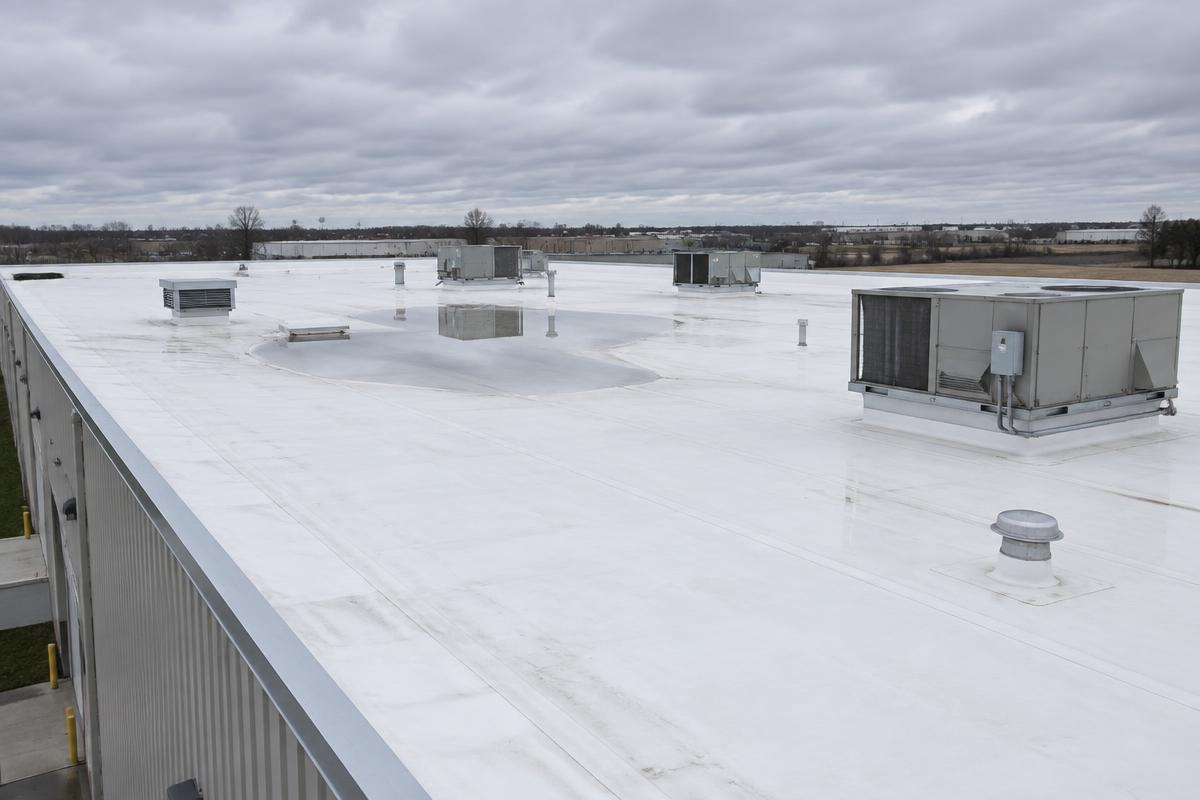
What you will see
Puddles that stay for days, dirt rings after they dry, or plant growth.
Likely causes
Most cases trace back to one of these:
- Clogged drains or scuppers
- Sagging deck or crushed insulation
- Not enough slope built in
How urgent is it?
Moderate. Ponding shortens membrane life and adds load.
Repair options
Depending on what the inspection finds:
- Clear drains
- Add tapered insulation or crickets
- Add drains or scuppers
When replacement is the smarter call
If insulation under the ponds is wet, that area or the whole roof may need replacement.
What an inspection should check
Ponding water is a symptom, so an inspection needs to find out why water is not draining rather than just confirming it sits there. A complete check usually covers:
- All drains, scuppers, and gutters for clogs or debris blocking flow
- Roof slope and low spots, measured or mapped to see how far water has to travel to a drain
- Membrane condition in and around ponding areas, checking for blistering, seam separation, or granule loss on modified bitumen
- Insulation underneath suspected soft or spongy areas, which can indicate trapped moisture
- Overall deck condition, since a sagging deck is a common root cause of persistent ponding
Temporary fix vs. permanent repair
Clearing a clogged drain or scupper can resolve ponding caused by blockage alone, and that is a reasonable first step. But ponding caused by an actual low spot in the deck or insufficient built-in slope will return after every rain until the slope itself is corrected. A permanent fix usually involves adding tapered insulation or crickets to redirect water, or in some cases adding new drains or scuppers where coverage is insufficient. If wet insulation is found under the ponds, that section often needs replacement as well.
What happens if you wait
Standing water that lingers for days after every rain adds continuous weight to the structure and accelerates membrane wear right where it sits, since UV exposure and temperature cycling are harsher on saturated membrane. Over multiple seasons, this pattern often leads to seam failures or membrane punctures exactly in the ponding zone, turning a drainage issue into a leak. Many membrane warranties also limit coverage for damage tied to ponding, which makes early correction worth checking against your roofing warranty terms.
What to do today
After the next rain, check the roof (or have someone check it) 48 hours later to see if water is still standing, which is the general threshold many roofing standards use to call it ponding rather than normal drainage time. Look at drains and scuppers for visible debris you can safely clear. Note the size and location of any ponding areas, and whether they appear in the same spots after every rain, which points to a slope or drainage design issue rather than a one-time blockage.
Cost drivers to expect
Flat roof ponding repairs vary widely based on root cause and scope. Relevant factors include:
- Whether the fix is clearing drains versus adding tapered insulation or crickets
- Size of the roof area affected by poor drainage
- Condition of insulation and deck under the ponding areas
- Membrane type and age, since repair approaches differ between TPO, EPDM, and modified bitumen
- Whether a roof coating is part of the plan alongside drainage corrections
How to describe it to the roofer
Let the roofer know where on the roof the ponding occurs, roughly how large the area is, and how long water typically sits after a rain. Mention the membrane type if you know it, and whether you have noticed any soft spots when walking the roof. If this is a commercial building, note whether tenants have reported any interior leaks, since that changes the urgency.
Central Illinois rainfall and temperature factors
Flat and low-slope roofs around Decatur deal with heavy seasonal downpours followed by hot summer sun and sharp winter freeze-thaw cycles, all of which stress a membrane that is already sitting under standing water. That combination is part of why ponding issues tend to get worse gradually rather than appear overnight, and why a flat roof repair assessment is worth scheduling before ponding becomes a recurring pattern every storm.
Maintenance after drainage is corrected
Even a well-corrected drainage plan needs upkeep, since drains and scuppers can clog again over time. A seasonal check, especially after fall leaf drop and after major storms, keeps drains clear and prevents a return to ponding. For buildings with a roof coating applied as part of the fix, periodic visual checks for wear or thinning in high-traffic or ponding-prone areas help catch issues before the membrane underneath is exposed again.
Questions worth asking before you approve the repair
Useful questions to raise with the roofer or facility manager handling the work:
- Is the fix addressing the root cause of the low spot, or only clearing current blockages?
- Will tapered insulation or crickets be added, and how will that change the roof's slope?
- Is the membrane itself in good enough condition to keep, or does it need replacement in the ponding zone?
- How will this plan hold up during the heaviest seasonal storms?
- Does this affect any existing roof warranty, and has that been checked?
Seasonal timing for flat roof drainage work
Flat roof drainage corrections are often best scheduled in drier stretches of spring or fall, giving the crew predictable working conditions for membrane and insulation work. Addressing ponding before the heavier summer storm season arrives reduces the number of storms that test a still-unresolved low spot, and a fall repair avoids pairing standing water with winter freeze cycles on a membrane that is already under stress.
Common questions
Does ponding void warranties?
Some membrane warranties exclude ponding damage. Check the warranty terms.
Is all standing water on a flat roof a problem?
Water that drains within about 48 hours after rain is generally considered normal. Water that sits much longer than that is what most roofing standards call problem ponding.
Can ponding water cause a roof to collapse?
In severe, long-term cases where significant water accumulates on a weakened deck, added weight becomes a real structural concern, which is why persistent ponding should not be ignored.
Will adding a roof coating fix ponding on its own?
A coating can help protect the membrane but does not correct drainage. Ponding caused by a low spot usually still needs tapered insulation or added drains.
Why does ponding seem worse in some seasons?
Heavy spring and summer storms can overwhelm existing drainage faster, while winter freeze cycles can also worsen small deck depressions over time.
Can I just add another drain anywhere on the roof?
Drain placement needs to match the actual low points and slope of the roof, so a roofer typically maps the ponding pattern before adding or relocating drains.
Do commercial roofs pond more than residential flat roofs?
Ponding can occur on either, but larger commercial roofs often have more complex drainage systems with more potential points for clogs or design issues.
Can trapped moisture under a flat roof be found without tearing it open?
Moisture scans can often locate wet insulation without a full tear-off, helping target repairs to the specific affected area.
Commercial Roof Evaluation for Flat Roof Ponding
Describe it in the form and a local roofing partner will help you sort it out.