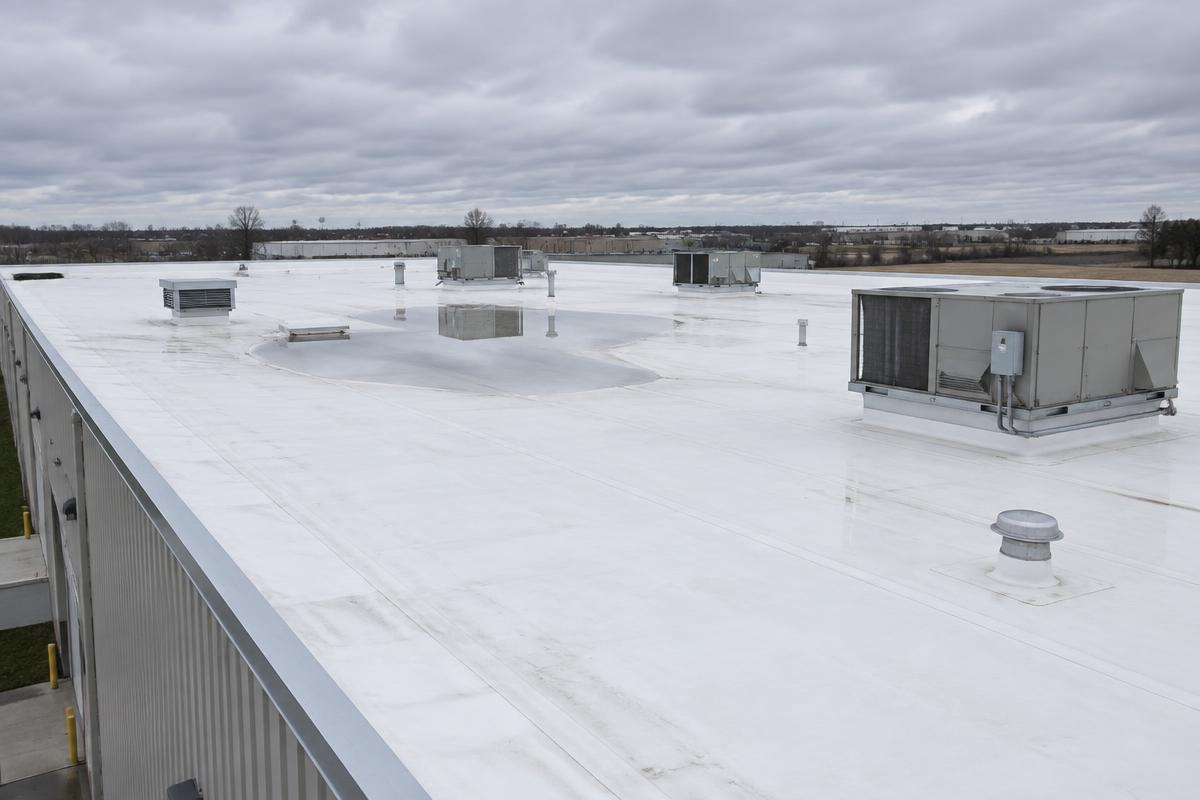
Good candidates
Metal or membrane roofs with dry insulation, minor seam wear, and no major ponding.
Poor candidates
Roofs with wet insulation, heavy ponding, or widespread failure. Coating those traps moisture.
What a roof coating is and is not
A roof coating is a liquid-applied material, commonly silicone, acrylic, or polyurethane, rolled or sprayed over an existing roof surface to add a protective, often reflective, layer. It is a maintenance and life-extension tool, not a substitute for repairing leaks or replacing a worn-out membrane. Coating a roof with existing problems usually just seals moisture in rather than keeping it out.
Which roof types take a coating well
Coatings are commonly applied over TPO, EPDM, modified bitumen, and metal roofs that are still structurally sound and mostly dry underneath. Each membrane type needs a compatible primer and coating chemistry, since not every coating bonds equally well to every surface.
Good candidate versus poor candidate
- Good: dry insulation, minor surface wear or chalking, isolated seam issues already repaired
- Good: a sound membrane nearing the end of its warranty but not actively leaking
- Poor: widespread wet insulation found during a moisture survey
- Poor: heavy, standing ponding water across large areas
- Poor: extensive membrane cracking, shrinkage, or seam failure
The condition check that should come first
Before a coating goes down, a responsible inspection checks for wet insulation, often with a moisture survey or core cuts, confirms seams and flashing are sound, and verifies drainage is working. Applying a coating over a roof with trapped moisture does not stop the deterioration underneath; it just hides it from view until it becomes a bigger problem.
What a coating can realistically do
A quality coating can add reflectivity that reduces surface heat and may lower cooling loads, fill minor surface cracking, and add a seamless protective layer that can extend a sound membrane's service life by a meaningful number of years. It does not add structural strength and will not stop an active leak on its own.
Maintenance after a coating is applied
Coated roofs still need periodic inspection, since coatings themselves thin and wear over time and may need a maintenance recoat on a cycle recommended by the coating manufacturer. Debris, ponding, and foot traffic can all wear a coating down faster in specific spots.
How this fits into a repair-versus-coat decision
For a commercial building, this decision usually comes up during a commercial roof repair evaluation, where the roofer compares patch-and-coat costs against the cost and disruption of a full replacement. A coating makes the most sense when the underlying membrane still has real service life left; it makes the least sense as a way to delay a replacement a roof clearly needs.
What good coating workmanship looks like
A properly applied coating goes down at a consistent, manufacturer-specified thickness (often measured in dry mils), over a clean, properly primed surface, with extra reinforcement at seams, flashing, and detail work where coatings are most likely to be too thin. A roofer should be able to explain the coverage rate being used and why, not just that a coating is being sprayed or rolled on.
Signs of poor coating workmanship
- Coating applied too thin to meet the manufacturer minimum dry mil thickness
- No reinforcing fabric or extra coats at seams and penetrations where stress concentrates
- Coating sprayed directly over debris, dirt, or standing moisture without proper cleaning
- No primer used on a surface that requires one for adhesion
- Uneven coverage with visible thin spots or drips left in place
A worked decision example
Consider a commercial TPO roof nearing the end of its warranty with some surface chalking but no leaks, wet insulation, or seam failures found during inspection. That is a reasonable coating candidate to extend its service life. Now consider a similar-aged roof where a moisture survey finds wet insulation across a third of the building. In that case a coating would trap the existing moisture problem rather than solve it, and repair or replacement of the affected area should come first.
Seasonal timing for coating work in central Illinois
Most coatings need a dry surface and a window of dry weather to cure properly, so many projects are scheduled in milder, lower-humidity stretches of spring or fall rather than during summer storm season or winter cold snaps. Rain shortly after application, before the coating cures, can affect performance, so scheduling around a stable weather window matters.
Maintenance checklist after a coating is applied
- Keep drains and scuppers clear so coated surfaces are not sitting under standing water
- Avoid unnecessary foot traffic on the coated surface where possible
- Walk the roof after storms to check for new wear or debris
- Watch for thinning or chalking in high-traffic or high-sun areas
- Plan for a maintenance recoat on the cycle the manufacturer recommends, not only when problems appear
Mistakes to avoid when considering a coating
Common mistakes include coating over a roof with unresolved leaks, skipping the moisture survey step entirely, choosing a coating not compatible with the existing membrane, and treating a coating as a way to indefinitely delay a replacement a building clearly needs.
Common questions
Can a coating fix a leaking roof?
A coating is not a leak repair. Leaks and wet insulation must be fixed first, then a coating may extend the life of a sound membrane.
Do coatings work on every roof?
No. Roofs with lots of wet insulation or failing seams usually need repair or replacement instead.
How long does a roof coating last before it needs to be reapplied?
This varies by coating type and exposure, but many coatings are designed for a maintenance recoat on a multi-year cycle recommended by the manufacturer, not a one-time, permanent application.
Does a coating change the color or reflectivity of my roof?
Often yes. Many coatings are white or light-colored specifically to increase reflectivity and reduce surface heat, though colored and non-reflective options exist too.
Can a coating be applied over a roof with scattered small leaks?
Those leaks should be repaired first. A coating applied over unresolved leaks will not stop the water intrusion and can make it harder to find later.
Is a coated roof still under the membrane manufacturer's warranty?
That depends on the manufacturer and whether the coating product and installer are approved under that warranty. Ask before applying any coating to a roof still under warranty.
Do coatings work on residential roofs or only commercial ones?
Coatings are mostly used on low-slope commercial and flat residential sections rather than steep-slope shingle roofs, where they are not a standard practice.
What is a moisture survey and why does it matter before coating?
A moisture survey, sometimes done with infrared scanning or core cuts, checks for wet insulation hidden under the membrane. Coating over wet insulation seals the moisture in rather than letting it dry out or be addressed.
Does a coating need reinforcing fabric at seams and penetrations?
Many manufacturers recommend or require fabric reinforcement at seams, curbs, and penetrations since those areas see more stress and movement than the open field.
Can a coating be applied by spray, roller, or both on the same roof?
Yes, crews sometimes spray large open areas for efficiency and roll or brush detail areas like seams and curbs for better control and thickness.
Commercial Roof Evaluation for a Coating Decision
Describe it in the form and a local roofing partner will help you sort it out.