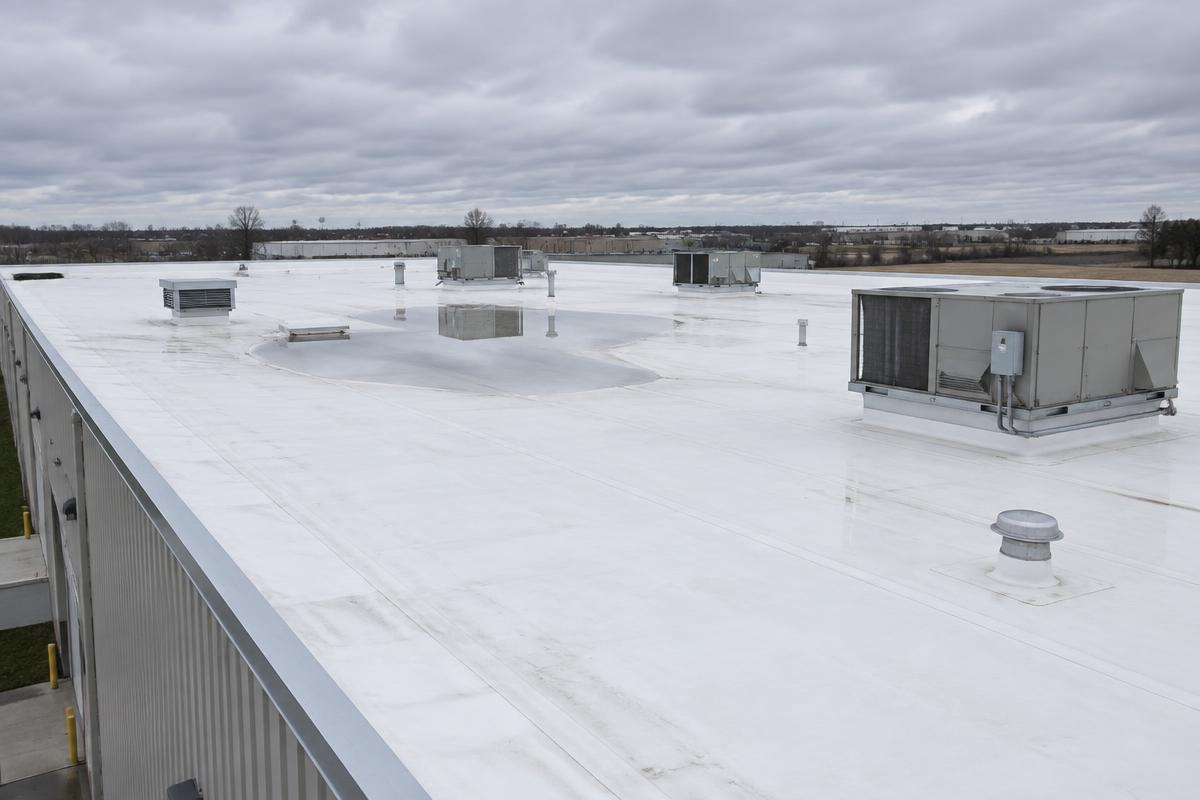
Where low-slope roofs leak first
On TPO, EPDM, and modified bitumen roofs, the membrane itself usually holds up longer than the details around it.
- Seams that open from heat cycling and foot traffic
- Curb flashing around HVAC units and exhaust fans
- Pipe and conduit penetrations with dried sealant
- Roof drains and scuppers clogged with debris
- Parapet wall flashing and coping joints
Why wet insulation changes the job
Water that gets under the membrane soaks the insulation board. Wet insulation loses much of its value, adds weight, and can keep leaking long after the hole is patched. A good repair scope checks how far moisture has spread, often with core cuts or a moisture survey, before deciding between a patch and a section replacement.
Repair options
The right fix depends on the membrane type, its age, and how much insulation is wet.
- Heat-welded or adhered patches over seam splits
- New curb and penetration flashing
- Drain cleanout and drain ring repair
- Replacing wet insulation in a section
- A restoration coating when the membrane is sound but aging
When repair stops making sense
If wet insulation covers a large share of the roof, leaks keep showing up in new spots, or the membrane is brittle and shrinking at the edges, repeated repairs often cost more over a few years than a planned replacement. Ask for both options in writing so you can compare.
What to tell the roofer
Note where the leaks show inside, after what kind of weather, and what equipment sits on the roof above. Photos of ceiling tiles and the date of the last roof work help speed up the visit.
Repair, not full replacement
Commercial roof repair is focused work: finding the specific point letting water in and fixing it, rather than rebuilding the whole system. Most repair calls come from a leak that has already shown up inside the building, a tenant complaint, or damage noticed during routine maintenance. The goal of a repair visit is to stop the water, assess how far it has already traveled, and give a clear answer on whether more repairs will be needed soon.
How urgent is a commercial leak
A leak over retail inventory, server equipment, or a tenant's unit can cause damage fast, so timing matters.
- Active dripping or staining inside calls for same-week attention
- A leak only after heavy rain may point to a drain or scupper backup
- A new stain with no recent rain can mean condensation rather than a roof leak
- Multiple new leak spots after one storm often means wind or hail damage worth a closer look
What the inspection looks for beyond the leak
A repair visit does more than patch the spot where water is showing inside, because water often travels sideways under a membrane before it drips through the deck.
- Tracing the leak path back from the interior stain to the likely roof entry point
- Checking seam condition around HVAC curbs and rooftop units
- Testing for soft or wet insulation with a moisture meter or core cut
- Inspecting drains, scuppers, and gutters for clogs that cause standing water
- Reviewing parapet and wall flashing for separation
Repair options by membrane type
The fix depends heavily on what the roof is made of. TPO roofing is usually repaired with heat-welded patches that bond into the existing membrane. EPDM roofing is patched with compatible rubber and primer, since mismatched materials do not bond well. Modified bitumen repairs often use torch-applied or self-adhered patches layered to match the existing roof's construction. Metal roof leaks on a commercial building are usually traced to a fastener, seam, or flashing issue rather than the panel itself.
From a reported leak to a finished repair
A typical repair follows contact and a description of where the leak shows up, an inspection that walks the roof and traces the path back to its source, a review of findings with photos, repair options presented with a written estimate, scheduling that works around the building's hours, the repair itself, and a final walkthrough to confirm the fix before cleanup.
What drives commercial repair cost
Repair pricing depends on more than the size of the hole in the membrane.
- How much insulation underneath is wet and needs replacing
- Roof access and whether equipment must be moved to reach the area
- Membrane type and whether matching material is readily available
- Number of separate leak points found during the inspection
- Whether the repair is urgent or can be scheduled normally
Why a leak can come back after a patch
A patch fixes the spot that was found, but it does not always catch every weak point nearby. If the surrounding seams are aging at the same rate, or if wet insulation was not fully removed, a new leak can appear a season or two later in a slightly different spot. Asking the roofer how confident they are in the repair, and for how long, helps set expectations before work starts. For roofs that keep producing new leak points, it may be worth reviewing the full commercial roofing picture rather than treating each leak separately.
Central Illinois storm stress on commercial roofs
Decatur-area commercial roofs see wind gusts that can lift membrane edges, hail that bruises or punctures weaker spots, heavy rain that overwhelms clogged drains, and winter freeze-thaw cycles that work water further into any existing gap. A roof that was fine through one storm season can develop new leak points the next, which is part of why a post-storm check matters even without an obvious leak yet.
Repair versus planning ahead
If repairs on the same roof keep stacking up year over year, it is worth asking for a straightforward comparison: continued repair costs versus a planned replacement. Roof coatings can sometimes buy time on a membrane that is aging but not yet failing, which is worth discussing if full replacement is not yet in the budget.
Common questions
Can a commercial roof be repaired in winter?
Many temporary and some permanent repairs can be done in cold weather. Some adhesives and coatings need warmer temperatures, so the roofer may tarp or patch now and finish later.
Will you work around business hours?
Scheduling depends on the local roofing partner. Mention your hours in the form so it can be planned around them.
Can a small commercial leak wait until a slow week at the business?
A small drip can sometimes wait a short time if it is contained, but water spreading under insulation does not pause for convenience, so getting it looked at sooner limits how much repair is eventually needed.
Do you need to shut down part of the building for a repair?
Most repairs are done from the roof itself without affecting operations below, though access near the repair area inside may need to be clear temporarily.
How do you know if a leak is from the roof or from plumbing?
An inspection traces the stain back toward either the roof above or nearby plumbing lines, since both can cause similar-looking interior staining.
What happens if the repair finds more wet insulation than expected?
The roofer should explain the larger scope and revise the estimate before proceeding, rather than doing extra work without approval.
Is commercial roof repair different in winter?
Cold weather can limit some adhesives and coatings, so winter repairs sometimes involve a temporary fix now and a full repair once temperatures allow.
Request a Commercial Roof Repair Visit
Describe it in the form and a local roofing partner will help you sort it out.