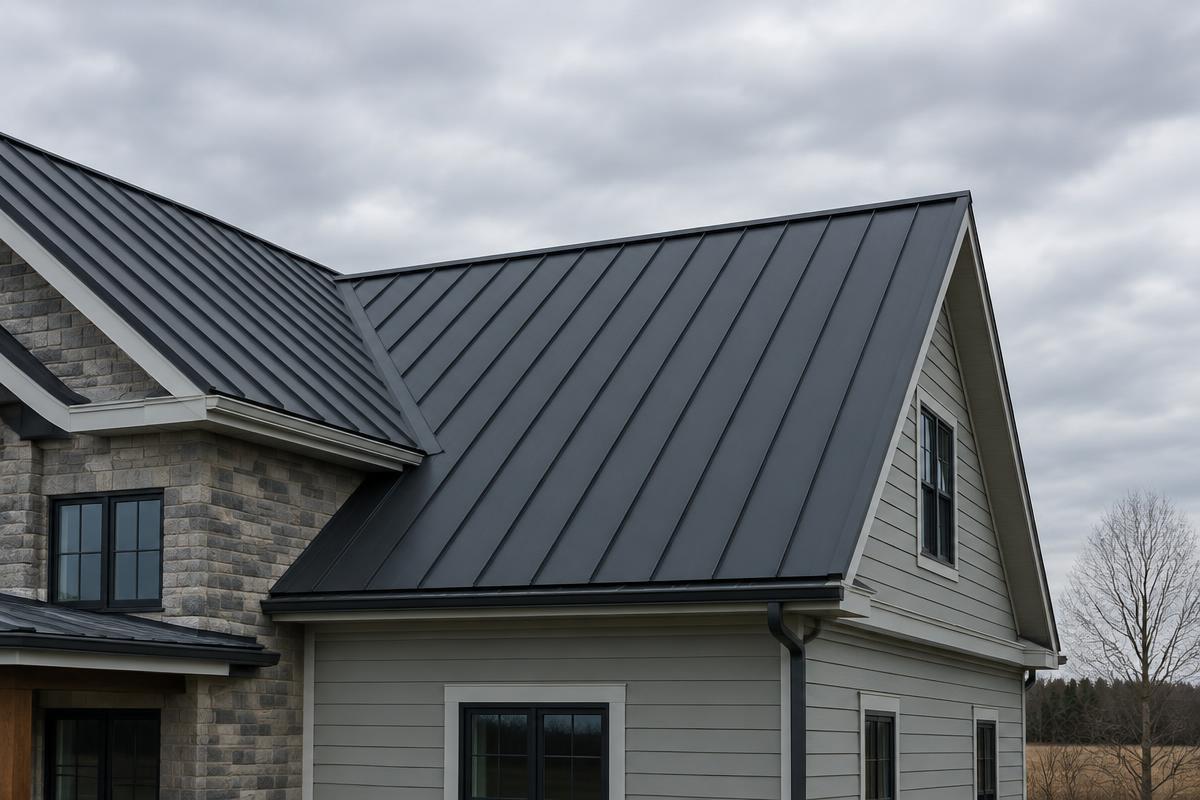
Why homeowners choose it
- No exposed fasteners on the panel face
- Panels can expand and contract with heat and cold
- Sheds snow and ice well
- Long service life with low upkeep
What makes a good install
Panels should be measured and formed to length, with proper clips, high-temperature underlayment, and clean trim at valleys, eaves, and chimneys. Trim work is where cheap installs fail.
Where standing seam fits among metal options
Standing seam is one specific system within the broader metal roofing category, built around raised, interlocking seams that hide the fasteners beneath the panel surface. This page focuses on that system specifically: how it is built, what it costs more for, and what to expect during installation.
How the seam and clip system works
Panels run from eave to ridge and lock together at raised vertical seams. Hidden clips fasten the panels to the deck underneath the seam, so no screw heads sit exposed on the panel face. This is the core difference from exposed-fastener metal, where screws go straight through the visible panel and rely on rubber washers to stay sealed over time.
- Panels interlock at raised seams, either mechanically crimped or snap-together
- Clips allow panels to expand and contract with temperature without buckling
- No surface-level fastener penetrations to fail or back out over time
- Panels are typically formed to the exact length needed for the roof
Why it costs more than exposed-fastener metal
Standing seam panels and clips cost more per square foot than basic exposed-fastener panels, and the installation itself takes more skill and time, particularly at trim details around valleys, chimneys, and transitions. The upfront cost difference is the main trade-off for avoiding fastener maintenance over the life of the roof. See metal roof cost for a broader look at what drives pricing across metal systems.
What a good standing seam installation looks like
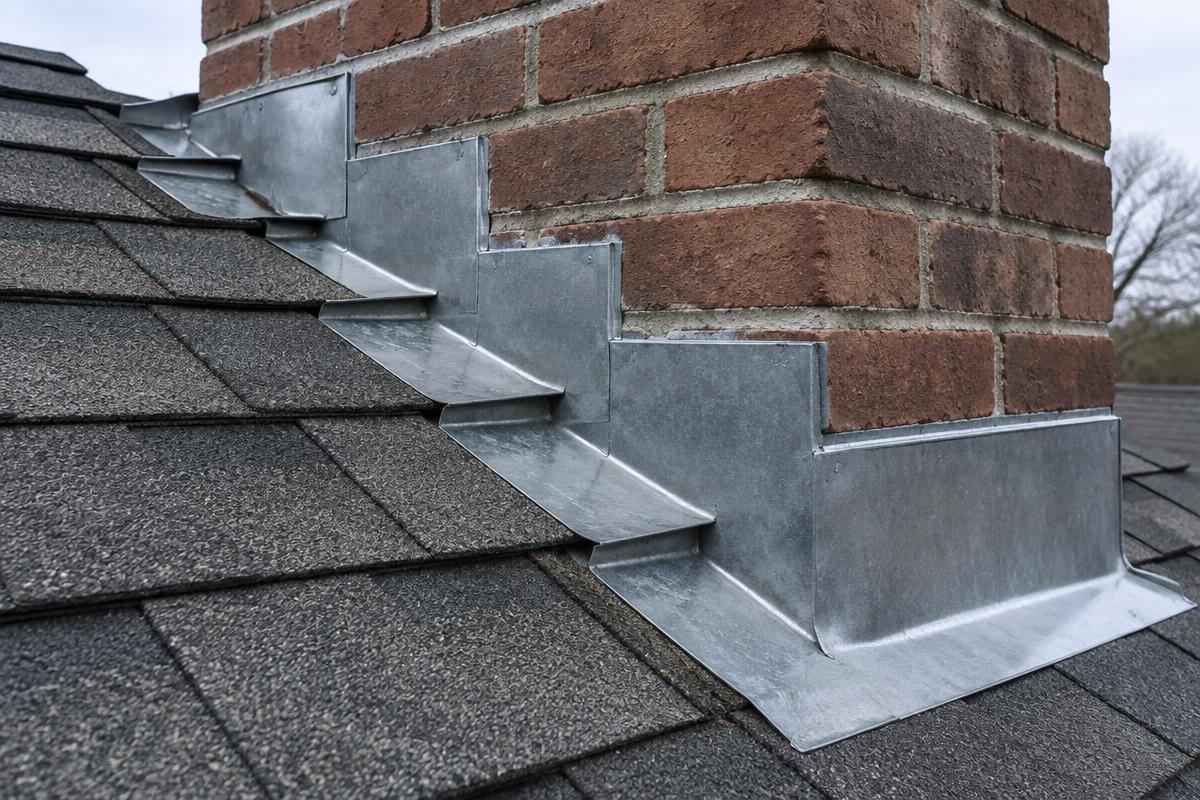
Trim work is where quality installs separate from cheap ones on this system.
- Panels measured and formed to the correct length rather than overlapped awkwardly
- Clips spaced to the manufacturer's specification for wind performance
- High-temperature underlayment used beneath the panels
- Clean, properly flashed valleys and penetrations
- Ridge caps and trim pieces finished to shed water without relying on sealant alone
Inspecting an existing standing seam roof
Standing seam roofs age differently than shingle or exposed-fastener roofs, so inspections look for different things: seam separation at ridges or valleys, clip movement allowing panel shift, dents from hail, scratches or wear in the panel coating, and flashing condition at chimneys, skylights, and wall transitions. Because there are no exposed fasteners to check, most issues on a well-installed standing seam roof show up at the trim and flashing details rather than across the open panel field.
From estimate to finished installation
A standing seam project begins with a call about the roof or new structure, followed by measurement and an inspection of the current roof if one exists. Panel profile, color, and clip spacing are discussed, and a written estimate is provided. Once scheduled, panels are formed to length, installed with proper clip spacing, and trim work is completed at every transition point. A final walkthrough confirms seams, flashing, and trim before cleanup finishes the job.
How standing seam handles Central Illinois weather
The hidden clip system allows panels to expand and contract through Decatur's summer heat and winter cold without the seams loosening the way exposed fasteners can over time. Standing seam sheds heavy rain quickly due to its raised seams and steep-enough installations, and it generally sheds snow and ice fast, which is why snow guards are sometimes added over doors and walkways. Large hail can still dent the panel surface, which is mostly a cosmetic concern on a well-installed system rather than a functional one.
Panel profiles and seam styles
Standing seam comes in a few seam styles, including snap-lock panels that click together without extra tools and mechanically seamed panels that are crimped on site with a seaming machine for a tighter, more wind-resistant connection. Mechanically seamed panels are often chosen for roofs facing more wind exposure or lower slopes, while snap-lock panels can suit straightforward residential installs. A roofer can explain which profile fits a specific roof's exposure and slope.
Maintaining a standing seam roof over time
Standing seam needs less routine maintenance than exposed-fastener metal since there are no surface fasteners to check, but it still benefits from periodic looks at sealant points, flashing around penetrations, and any areas where debris collects, like valleys near trees. A roof that goes years without any check can still develop a slow flashing leak at a chimney or skylight even if the panel field itself is in excellent shape.
Is standing seam the right upgrade for every roof
Standing seam is often chosen by homeowners planning to stay long-term and wanting the lowest-maintenance metal option, or on buildings where appearance and clean lines matter. It is not always worth the added cost for a short-term hold or a very simple structure where exposed-fastener metal already performs well. Comparing both options against the specific building and timeline during the estimate is the best way to decide.
Common questions
Can standing seam go on a low-slope porch?
Many standing seam systems are rated for lower slopes than shingles. Check the product's minimum slope.
Can standing seam be installed on a steep roof as well as a low-slope one?
Yes, standing seam works across a range of slopes, though very low-slope sections should be checked against the specific product's minimum slope rating.
Does standing seam need special tools to install correctly?
Panels are often formed with a seaming machine on site or at a shop to the exact roof dimensions, which is part of why the installation is more specialized than basic panel roofing.
What colors are available for standing seam panels?
Most manufacturers offer a range of factory finishes in various colors, though availability can vary by supplier and panel profile.
Can standing seam be repaired if a panel is damaged?
Depending on the damage, an individual panel can sometimes be replaced, though matching the seam profile and finish requires careful work.
Is standing seam noisier in rain than shingles?
With solid decking and proper underlayment beneath the panels, most people notice little difference in sound during rain.
Request a Standing Seam Estimate in Decatur
Describe it in the form and a local roofing partner will help you sort it out.