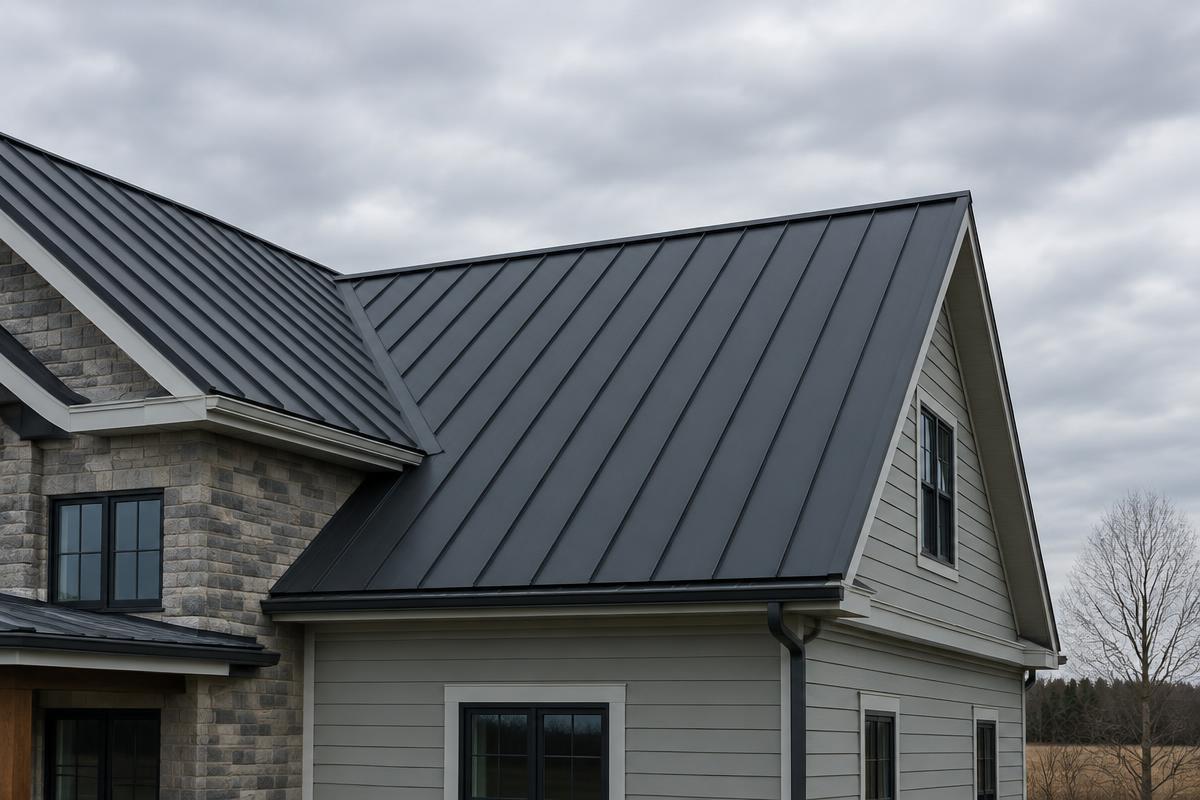
Two main types
Standing seam hides its fasteners under raised seams. Exposed-fastener panels screw straight through the metal. They differ in price, lifespan, and upkeep.
Things to know before you choose
- Large hail can dent metal even when it does not leak
- Exposed screws need checking as rubber washers age
- Proper underlayment reduces condensation and noise
- Snow can slide off fast, so guards may be needed over doors
Why homeowners compare metal roofing options
Metal roofing covers a range of products, not one single system, and the right choice depends on the building, budget, and how long the owner wants to go between major maintenance. This page compares the main options in general terms. For a deeper look at the premium hidden-fastener system specifically, see standing seam metal roofing.
Panel types side by side
The two broad categories differ mainly in how the panels attach and what that means for leak points.
- Standing seam: panels connect at raised interlocking seams with hidden clips, no exposed fasteners on the face
- Exposed-fastener panels: screwed directly through the panel with rubber-washered fasteners visible on the surface
- Corrugated and ribbed profiles: common on barns and outbuildings, usually exposed-fastener
- Stone-coated steel: shaped to resemble shingles or tile while using a metal substrate
How the two main systems compare
Exposed-fastener metal roofing generally costs less upfront and installs faster, making it a common choice for shops, barns, and budget-conscious buildings. Standing seam costs more but avoids the ongoing maintenance of checking and replacing aging fastener washers, since its clips are hidden under the seam. Exposed-fastener metal can still last for decades with periodic fastener checks, so the choice often comes down to upfront budget versus long-term upkeep preference rather than one system being clearly better.
What an inspection on a metal roof checks
Metal roofs fail differently than shingles, so an inspection focuses on different details.
- Fastener condition and whether washers are cracking or backing out
- Seam integrity on standing seam panels, especially at ridges and valleys
- Panel fastening at eaves and rakes where wind uplift is strongest
- Dents from hail that may not leak but can affect appearance or coating
- Condition of underlayment visible at panel overlaps and penetrations
- Rust or coating wear, especially near cut edges and fasteners
Process from first call to finished roof
A metal roofing project typically starts with a call to describe the building and goals, followed by an inspection of the existing roof or a measurement of a new structure. Findings are reviewed, panel and fastener options are discussed, and a written estimate is provided. Once scheduled, panels are measured, delivered, and installed, with trim work at valleys, ridges, and penetrations completed carefully since that is where most future leaks would start. A walkthrough and cleanup close out the job.
Cost factors across metal systems
Metal roofing costs vary more than shingle costs because of the range of products involved.
- Panel type: exposed-fastener versus standing seam versus specialty profiles
- Metal gauge and coating quality, which affect durability and warranty
- Roof complexity, including valleys, dormers, and penetrations
- Whether the job is new construction or a tear-off of an existing roof
- Underlayment choice, which affects noise and condensation resistance
Metal roofing in Central Illinois conditions
Metal roofing is common on barns and shops across Macon County partly because it handles wind well and sheds snow quickly. Hail is worth planning for since large hail can dent panels even without causing a leak, which matters more for appearance than function. Summer heat and winter cold both cause panels to expand and contract, so proper fastening and trim detail matter for long-term performance. Heavy rain generally sheds fast off a well-installed metal roof, though valleys and penetrations still need attention during installation.
Metal roofing versus asphalt shingles
Many homeowners weigh metal against a traditional shingle reroof. Asphalt shingle roofing and architectural shingles cost less upfront and are familiar to most roofers, while metal costs more initially but is often chosen for its longevity and wind performance. The decision usually comes down to how long the owner plans to stay in the home and what budget fits the project now versus a future reroof.
Underlayment choices for metal roofs
The underlayment beneath metal panels affects both performance and comfort inside the building. High-temperature synthetic underlayments are commonly used since metal can get hot in direct sun, and proper underlayment also helps reduce condensation forming on the underside of panels during temperature swings. Skipping or skimping on underlayment is one of the more common shortcuts in a lower-quality metal roofing job, even though it is not visible once the panels are installed.
Metal roofing on outbuildings versus homes
A barn, shop, or pole building often uses simpler exposed-fastener panels since appearance and acoustics matter less than on a house, and the lower upfront cost fits typical outbuilding budgets. On a primary residence, many homeowners lean toward a more finished look and the lower long-term maintenance of standing seam, though either system can work on a house depending on priorities. Discussing how the building is used helps the roofer recommend a system that matches expectations rather than defaulting to one type.
When metal is not the right fit
Metal is not automatically the best choice for every roof. Homes with very complex rooflines can see higher labor costs for all the extra trim work, and some neighborhoods or historic districts have material restrictions worth checking before committing to a style. An honest comparison during the estimate should include whether metal truly fits the building and budget rather than defaulting to it.
Common questions
Is a metal roof loud in rain?
On a house with solid decking and underlayment, most people notice little difference. Open-frame barns are louder.
Does metal roofing attract lightning more than shingles?
Metal does not attract lightning more than other roofing materials. If a strike occurs, metal does not ignite like some other materials can.
Can metal roofing be installed over an existing shingle roof?
In some cases a system is designed for recover over shingles, but many metal roof jobs still call for a tear-off. A roofer can confirm which applies to a given roof.
How do snow guards work with metal roofs?
Snow guards attach to the panels to break up sliding snow and ice so it releases in smaller amounts rather than all at once over doors or walkways.
Does metal roofing rust?
Most modern coated steel and aluminum panels resist rust well for decades, though cut edges and scratches in the coating are the most vulnerable spots if not sealed.
Is metal roofing a good fit for a low-slope section?
Some metal panel systems are rated for lower slopes than shingles, but very flat sections still usually need a membrane instead. Check the specific panel's slope rating.
Can hail void a metal roof warranty?
Warranty terms vary by manufacturer and product, so it is worth reading the specific warranty document for cosmetic versus functional damage coverage.
Compare Metal Roofing Options in Decatur
Describe it in the form and a local roofing partner will help you sort it out.