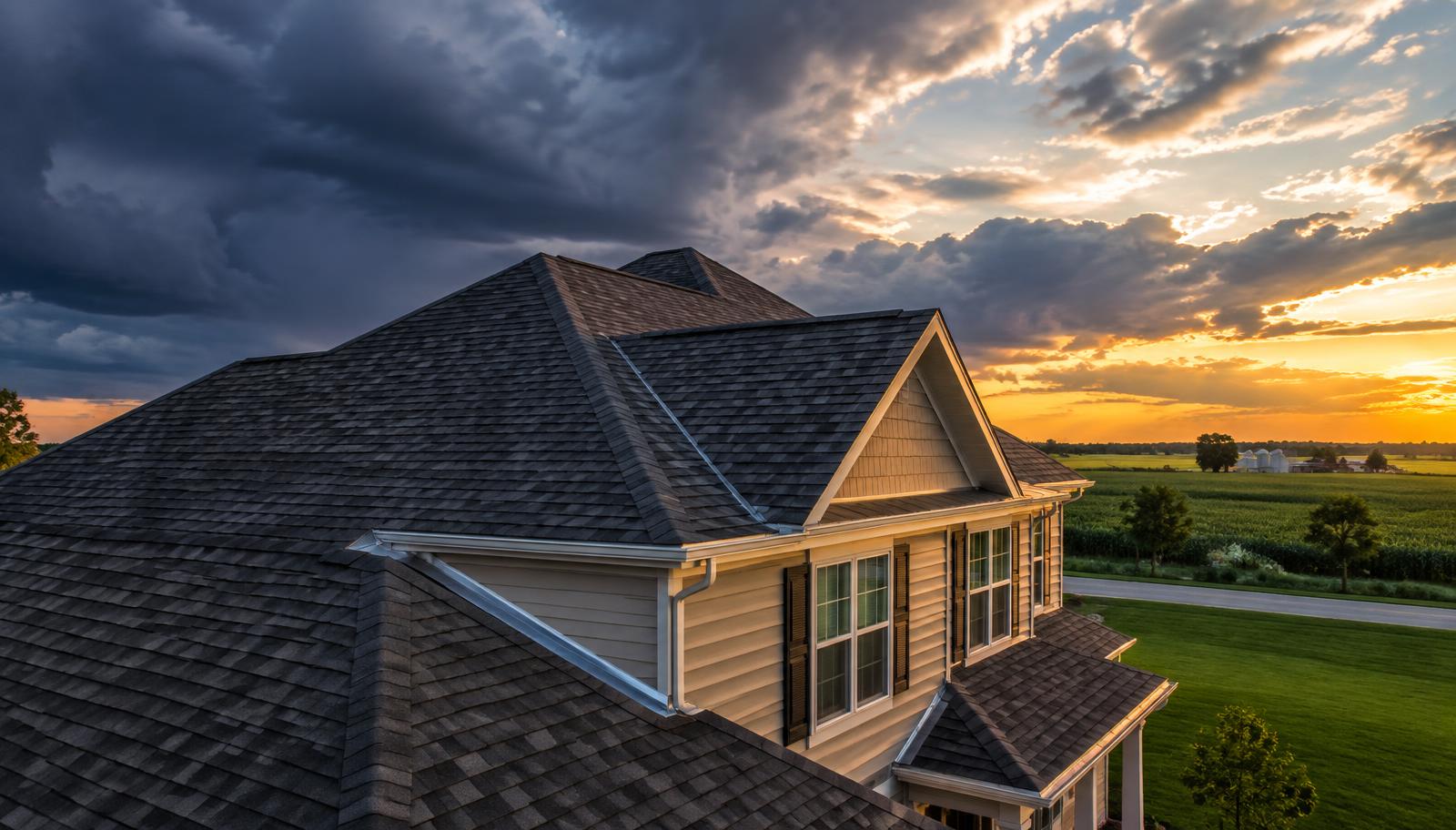
The parts of a shingle roof
A shingle roof works as a system. Each layer has a job.
- Roof decking: the wood the roof is nailed to
- Underlayment: a backup layer under the shingles
- Ice and water barrier at eaves and valleys
- Drip edge and flashing at edges, walls, and chimneys
- Starter strip, field shingles, and ridge caps
- Intake and exhaust ventilation
3-tab vs. laminated shingles
3-tab shingles are a single flat layer. Laminated (architectural) shingles have two bonded layers, weigh more, and usually carry higher wind ratings. Many manufacturers have moved most of their lines to laminated shingles.
What shortens shingle life here
Heat on dark south-facing slopes, poor attic ventilation, freeze-thaw cycles, and hail all wear shingles faster. Two roofs with the same shingle can age very differently based on ventilation and install quality.
Signs it is time to look closer
Curling or cupped edges, lots of granules in the gutters, bare spots, and repeated leaks are signs the shingles are aging out.
Why the system matters more than the shingle brand
Homeowners often shop by shingle color and brand, but a shingle roof is really a stack of layered components working together. A premium shingle over bad decking or poor ventilation will underperform a modest shingle installed correctly on a well-ventilated roof. Understanding the whole system helps you judge a quote, not just a shingle sample.
Decking and what sits under the shingles
The decking, usually plywood or OSB, is the structural base everything is fastened to. Soft, delaminated, or water-stained decking needs to be replaced during a roof replacement, not covered over, since shingles and nails cannot hold well to weak wood. Over that sits synthetic or felt underlayment as a secondary water barrier, plus ice and water membrane at eaves, valleys, and penetrations where leaks are most likely.
Flashing, drip edge, and starter course
Metal flashing directs water away from chimneys, walls, skylights, and valleys, and it fails independently of the shingles themselves; see common patterns at chimney flashing leaks and valley leaks. Drip edge along the eaves and rakes keeps water from wicking back under the shingles into the fascia. The starter course along the eave is a dedicated starter shingle product, not just a trimmed field shingle, and skipping it is a common shortcut that shows up as early edge wind damage.
Ventilation, the part homeowners forget
A balanced system of intake vents (often at the soffit) and exhaust vents (ridge or box vents) moves air through the attic. Without it, summer heat bakes the underside of shingles and winter moisture can condense on the decking. Poor ventilation is one of the more common reasons two identical shingles age at very different rates on similar-looking homes.
3-tab versus laminated, as a system choice
3-tab shingles are lighter, cheaper, and have lower wind ratings; laminated (architectural) shingles add thickness and generally higher wind resistance, covered in more depth on the architectural shingles page. Many manufacturers have scaled back 3-tab production, so matching an older 3-tab roof for a partial repair is getting harder every year.
What tends to fail first
In practice, flashing details and worn sealant strips usually fail before the field shingles wear out everywhere at once.
- Pipe boot rubber cracking well before the shingles around it age out, see pipe boot leaks
- Nail pops and exposed fasteners working loose with freeze-thaw cycling
- Valley metal or valley shingles wearing from concentrated water flow
- Ridge cap shingles drying out faster since they sit exposed on all sides
- Granule loss on south-facing slopes from direct sun exposure
Maintenance that actually extends life
Asphalt shingle roofs are low-maintenance but not no-maintenance. Clearing debris from valleys, keeping gutters flowing so water does not back up under the eave, trimming overhanging branches that drop debris and hold moisture, and having an inspection after major storms all help catch small issues before they become ceiling water stains or interior damage.
Central Illinois conditions and shingle roofs
Local weather asks a lot of a shingle roof: hail that can bruise or fracture the mat, wind gusts that test every seal strip and nail, freeze-thaw cycles that work at cracks and loose flashing all winter, and summer heat that bakes dark shingles on south slopes. A roof built with good underlayment, solid flashing, and real ventilation handles that cycle far better than one built to minimum spec.
A worked example: repair or full system replacement
Say a roof is 15 years into a 25-to-30-year shingle but a recent wind event tore several shingles loose in one section near a chimney. An inspection may find the chimney flashing also needs attention, see chimney flashing leaks, while the rest of the field is sound. In that scenario a targeted repair addressing both the shingles and the flashing can make sense, rather than a full tear-off, since the underlying decking and ventilation are not in question. The same symptoms on a 28-year-old roof with granule loss across every slope point toward planning a full replacement instead.
What good shingle system workmanship looks like
Beyond the shingles themselves, look for clean step flashing woven correctly at walls and chimneys (not just caulked over old metal), ice and water membrane carried the correct distance up from the eave in valleys and around penetrations, drip edge installed under the underlayment at the rake and over it at the eave, and soffit vents that are not blocked by insulation inside the attic. These details matter more to long-term performance than the shingle brand printed on the wrapper.
Questions to ask before a shingle system project
- Will the decking be inspected and priced separately if replacement is needed
- What ice and water membrane coverage is planned at eaves, valleys, and penetrations
- Is the attic ventilation being evaluated, or just the shingles being swapped
- What drip edge and starter shingle products will be used
- How will existing flashing at chimneys, skylights, and walls be handled
Homeowner checklist for ongoing care
- Walk the yard and roofline from the ground after any strong storm looking for missing or lifted shingles
- Keep valleys and gutters clear so water sheds instead of backing up under shingles
- Check the attic occasionally for daylight, moisture, or musty smells that point to a vent or flashing issue
- Have an inspection every couple of years, and always after hail or high wind
- Address small issues like a lifted shingle or cracked pipe boot promptly instead of waiting
Mistakes that shorten a shingle roof life
Common mistakes include nailing shingles above the strip (sometimes to speed up the job), skipping starter shingles to save material, reusing old flashing that is already rusted or bent, covering a second layer of shingles over an existing worn layer rather than a full tear-off, and ignoring ventilation entirely because it is less visible than the shingles. Any of these can cut years off an otherwise good roof, regardless of the shingle brand chosen.
How the shingle system connects to the rest of the roof
A shingle system does not work in isolation from the rest of the roof. Ridge vents tie into attic ventilation, valleys connect to flashing and drainage, and penetrations like pipe boot leaks and skylight leaks depend on correct flashing details, not just the shingles around them. A roofer evaluating one part of the system should be looking at how it interacts with the rest, not treating each component in isolation.
Common questions
Is impact-resistant shingle worth it?
In hail-prone areas some homeowners choose Class 4 impact-rated shingles. Some insurers offer discounts for them; ask your insurer directly.
Can new shingles go over old ones?
Some codes allow one overlay, but a tear-off lets the roofer inspect and repair the decking. Ask what local code allows.
What is the difference between felt and synthetic underlayment?
Felt is an older asphalt-saturated paper product; synthetic underlayment is a newer woven material that is lighter, often more tear resistant, and increasingly common on new installs. Both serve as a secondary water barrier under the shingles.
Why does my roofer want to replace the decking I did not ask about?
Soft or delaminated decking will not hold nails properly and can void shingle warranties if left in place. A roofer who finds it during tear-off should show you the affected area before replacing it.
Is starter strip really necessary along the whole eave?
Yes. Starter shingles seal the first course down and resist wind uplift at the most exposed edge of the roof. Skipping it is a shortcut that tends to show up as early edge damage.
Do ridge vents work with every attic layout?
Not always. Ridge vents need matching intake at the soffit to work as intended, and some roof shapes or attic designs are better served by other vent types. An inspection can confirm what your attic needs.
How can I tell if my shingle roof has enough ventilation?
Signs of poor ventilation include excessive attic heat in summer, frost or moisture on the underside of the decking in winter, and shingles that seem to age faster than their rated life. An attic check during an inspection can confirm airflow.
Does the color of my shingles affect how long they last?
Darker shingles absorb more heat, which can accelerate aging on hot, sun-exposed slopes, especially with weak ventilation. It is one factor among several, not the deciding one.
Can I replace just the shingles and keep the existing flashing?
Sometimes, if the flashing is in good condition and compatible with the new shingles, but aging or rusted flashing is often replaced at the same time since it is already exposed during tear-off.
Does adding a layer of new shingles over old ones save money?
It can cost less upfront, but it hides the decking from inspection, adds weight, and most manufacturers limit warranty coverage on a second layer. Many roofers recommend a full tear-off for a longer-term result.
How do I know if hail has damaged my shingle system without obvious leaks?
Hail can bruise the asphalt mat or knock granules loose without creating an immediate leak. See [hail dents](problems/hail-dents) for how impact damage on a roof is generally assessed, and have a professional look before writing off a storm as harmless.
Request Roof Help for Your Shingle System
Describe it in the form and a local roofing partner will help you sort it out.