What you will see
A tan, yellow, or brown ring that may grow after storms. Paint may bubble. The spot may feel soft.
Likely causes
Most cases trace back to one of these:
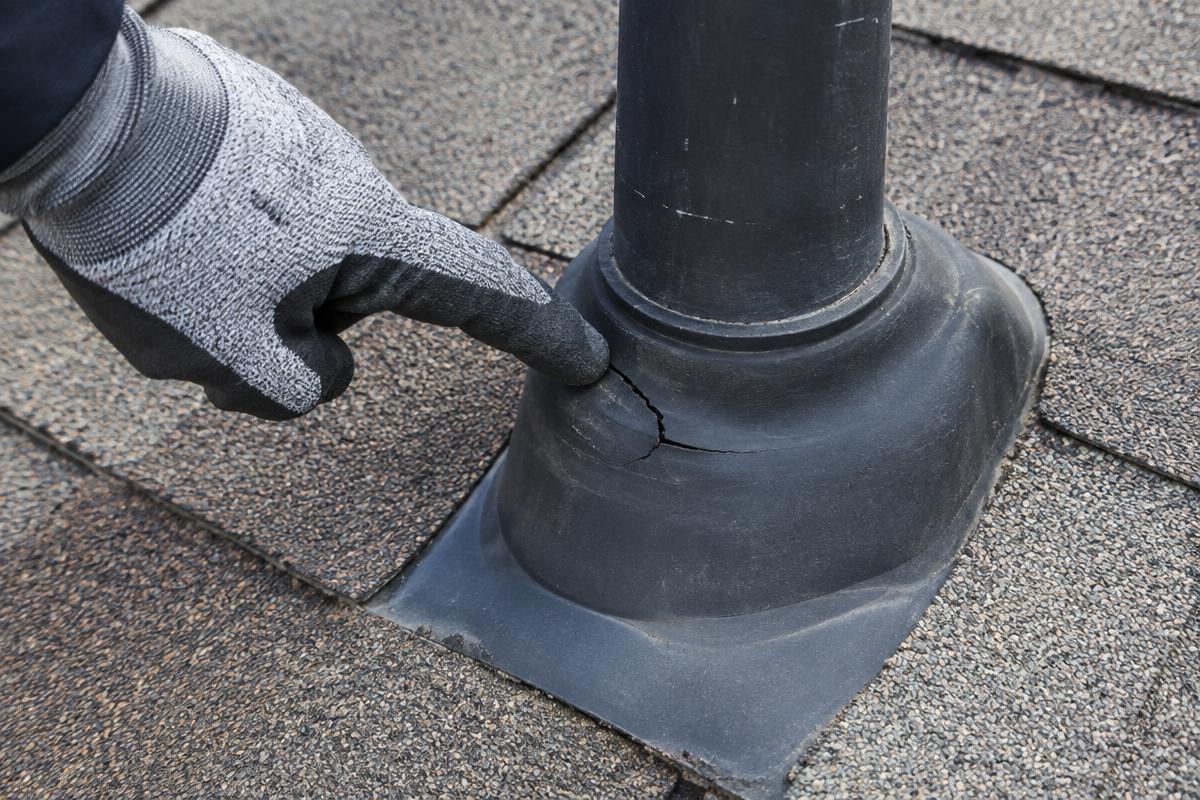
- Cracked pipe boot above the stain or uphill from it
- Chimney or wall flashing leak
- Ice dam backup in winter
- Bathroom fan venting moist air into the attic
- Plumbing leak, not the roof at all
How urgent is it?
Not an emergency unless the ceiling sags or water drips near lights. But every storm keeps wetting insulation and wood, so schedule an inspection soon.
Repair options
Depending on what the inspection finds:
- Replace the failed pipe boot or flashing
- Fix attic ventilation or bath fan venting
- Replace wet insulation and drywall after the leak is stopped
When replacement is the smarter call
If stains appear in several rooms, or the shingles are near the end of their life, multiple leaks point to a roof that is wearing out everywhere.
What an inspection should check
A ceiling stain only tells you water reached the drywall, not where it came from. A proper inspection starts in the attic directly above the stain and works outward, since water often travels along a rafter or sheathing seam before it drips. A good roof inspection should walk through several checkpoints before anyone names a cause.
- Attic insulation and decking above and uphill from the stain, checked for damp wood or dark staining
- Every pipe boot, vent, and flashing point in the attic's drain path
- Bathroom and kitchen exhaust fans, to confirm they vent outside and not into the attic
- Roof surface above the stain for cracked boots, lifted shingles, or flashing gaps
- Insulation depth and attic airflow, since trapped moisture can mimic a leak
Temporary fix vs. permanent repair
A bucket, a tarp over the suspected spot, or a smear of roofing cement on a cracked boot can buy a few dry days, but none of those stop the water source. A temporary fix only matters if it keeps the house dry until someone can trace the leak properly. The permanent fix depends on what is actually failing - a new pipe boot, re-flashed chimney, or corrected fan venting - and it should be paired with drying out the wet insulation and drywall so mold does not start behind the patch.
What happens if you wait
Ceiling stains rarely shrink on their own. Left alone through a few more rounds of Central Illinois rain, freeze-thaw cycles, and summer humidity, the wet area tends to spread, drywall can soften and sag, and framing near the leak can start to rot. Mold growth in damp insulation is also a real risk once moisture sits for weeks. None of this requires a dramatic storm - it just takes time and repeated small leaks, the same pattern that drives roof leaks after heavy rain.
What to do today
Take a photo of the stain with a tape measure or coin in frame so you can track growth. Check the attic if it is safe to do so, and look for daylight, wet insulation, or a visible drip line. Avoid painting over the stain until the leak is confirmed stopped. If the area feels soft or is actively dripping, place a container underneath and call for an inspection rather than waiting for the next storm.
Cost drivers to expect
What a repair ends up costing depends less on the stain itself and more on what caused it and how long it has been active. Key factors include:
- How many access points the roofer needs to reach the leak (steep slope, high roof, multiple layers)
- Whether drywall, insulation, or framing needs to be replaced along with the roofing fix
- Whether the cause is a single point failure (one boot) or a pattern across several penetrations
- Whether interior repainting or drywall finishing is bundled into the same visit
How to describe it to the roofer
When you call, mention where the stain is relative to the roofline (which side of the house, near a chimney or bathroom vent, close to an exterior wall), how long it has been there, whether it only grows after rain, and whether it has gotten bigger recently. That detail helps the roofer prioritize where to look first instead of starting from scratch.
Maintenance after the repair is done
Once the leak source is fixed and drywall or insulation is replaced, a little follow-up protects that investment. Check the repaired area after the first few heavy rains to confirm it stays dry, and keep attic insulation from being pushed against pipe boots or vents where it can trap moisture. A yearly glance at bathroom and kitchen exhaust fan terminations, confirming they still vent outside rather than into the attic, catches a common repeat cause before it creates a new stain. Many homeowners pair this with a broader look at residential roofing upkeep rather than waiting for the next spot to appear.
Questions worth asking before you approve the repair
A short list of questions can save a repeat visit later:
- What exactly is causing this leak, and how confident are you in that diagnosis?
- Will you check nearby penetrations too, or only the spot above the stain?
- Does the repair include drying or replacing wet insulation, not just the roof-side fix?
- Will the drywall need separate repair, and is that included or a referral?
- What would make this leak come back after the fix?
Seasonal timing for this kind of repair
Ceiling stains can show up any time of year, but the urgency to act often depends on season. A stain discovered in late fall is worth addressing before winter, since a slow leak combined with freeze-thaw cycling tends to do more damage over a cold season than the same leak would in summer. Spring, after a stretch of heavy rain, is a common time these stains first appear, and early summer scheduling before storm season intensifies can mean a faster appointment than waiting until after a major system moves through.
Common questions
Should I paint over it?
Not yet. Fix the leak first, let the area dry, then prime with a stain-blocking primer.
Could it be my plumbing?
Yes, if the stain is under a bathroom. A stain that grows only after rain points to the roof.
Why does the stain show up far from where the roof is actually leaking?
Water often runs along a rafter, truss, or sheathing seam before it drips through the drywall, so the visible stain can be several feet from the real entry point.
Can a single stain mean more than one leak?
Yes. Sometimes a boot leak and a ventilation issue both contribute moisture to the same spot, which is why an attic check matters more than just looking at the ceiling.
Will a dehumidifier fix the smell after a leak?
It can help dry the area, but it will not stop mold if wet insulation or drywall stays in place. Those materials usually need to be replaced.
Does a stain always mean active water right now?
Not necessarily. Some stains are old and dry, from a leak already repaired. A moisture meter or a simple touch test can tell you if it is still damp.
Should I cut into the drywall myself to look?
A small test hole can help locate a leak, but cutting too much before the roof cause is confirmed can mean patching drywall twice.
Should I repaint the ceiling right after the repair?
It is usually best to let the area dry out fully first, since painting over lingering moisture can trap it and lead to peeling or mold later.
Can a stain return even after the roof is fixed?
Yes, if a different penetration nearby starts leaking later, which is why checking the broader area during the repair matters, not just the original spot.
Get a Roof Inspection to Trace That Ceiling Stain
Describe it in the form and a local roofing partner will help you sort it out.