Older homes
Older homes often have plank decking, several old shingle layers, brick chimneys, and little attic ventilation. Tear-offs here can reveal decking that needs extra attention.
Ranch homes
Lower slopes shed water more slowly, so underlayment and ice shield at the eaves matter more. Attached porches and low-slope sections may need a flat-roof membrane, not shingles.
Newer subdivisions
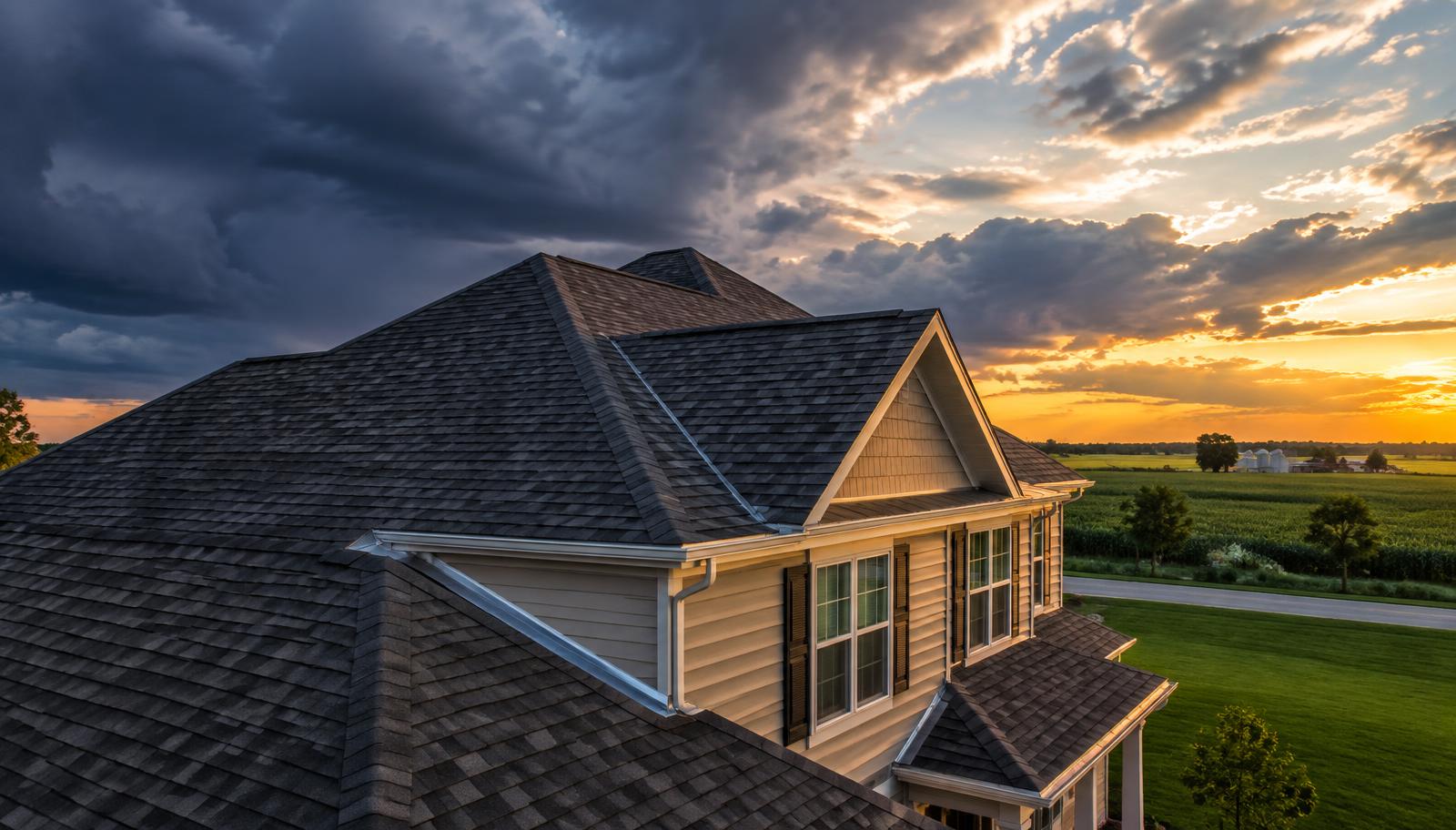
Many valleys, dormers, and wall intersections mean more flashing points. That is where most leaks on newer homes begin.
How a residential roofing project usually proceeds
Whether the need is a repair or a full replacement, most residential visits follow the same basic shape: an inspection of the roof and attic, a review of findings, options tailored to your home's construction, a written estimate, and scheduled work with cleanup and a walkthrough at the end.
Attached structures and roof transitions
Many homes have porches, additions, or attached garages with a different roof pitch than the main house. These transition points, where one roofline meets another, are common trouble spots for flashing. A roofer looking at your roof inspection needs should walk every roof plane, not just the main slopes.
Signs your home may need attention soon
Across all home styles, a few warning signs tend to show up before a major failure:
- Granules collecting in gutters or at downspout outlets
- Curling, cupping, or cracked shingles visible from the ground
- Daylight visible through the attic roof deck
- Soft spots felt underfoot in the attic or on a ladder inspection
- Interior stains appearing after storms
What drives residential roofing cost
Home roofing projects are priced around square footage, pitch, number of layers to remove, decking condition, and material choice. See roof replacement cost and roof repair cost for the general factors involved in each type of project.
Materials homeowners commonly consider
Architectural shingles remain the most common residential choice for their balance of cost and appearance. Some homeowners with steeper roofs or a preference for longevity look at metal roofing instead, while attached flat sections like porch roofs may need a dedicated flat roof repair approach rather than shingles.
Central Illinois weather and residential roofs
Decatur homes deal with the same regional stresses regardless of age or style: wind that can lift shingle edges, hail that can bruise or crack shingles, freeze-thaw cycles that work into small gaps over winter, and heavy rain events that test drainage and flashing all at once. Whatever the age of your home, these stresses apply, so periodic inspection matters even without an obvious problem.
Planning ahead instead of reacting
A scheduled roof inspection, rather than waiting for a leak, gives you time to plan a repair or replacement on your own timeline instead of during an emergency. This is especially useful before winter, when temporary measures are harder to arrange quickly in bad weather.
A worked example: weighing options for an older home
Consider a homeowner in an older house with a roof that has one layer of shingles already showing curling and granule loss across most slopes, plus a soft spot found during an attic check. Rather than patching the soft spot alone, an inspection report might recommend reviewing roof replacement cost alongside repair pricing, since isolated patches on a roof already failing broadly tend to be a short-term fix rather than a lasting one.
What good versus poor residential roofing work looks like
On a well-done project, flashing at wall-to-roof transitions is formed and sealed properly, shingle lines stay straight across valleys and hips, and gutters are reattached cleanly without gaps. On a poorly done project, you may see mismatched shingle colors from a patch job, flashing simply caulked rather than reshaped, or debris and stray nails left in the yard after the work is finished.
- Good: consistent shingle lines across valleys, hips, and transitions
- Good: a nail sweep of the yard and driveway after work finishes
- Poor: caulk used in place of proper flashing at wall transitions
- Poor: leftover debris, wrappers, or cut shingle scraps left behind
Homeowner checklist before a residential roofing visit
A few simple steps make the visit more productive:
- List every structure on the property you want looked at
- Note any known trouble spots, even minor ones, before the inspection
- Clear a path to attic access if it is in a closet or garage
- Have a recent photo of the roof from the street if one exists
- Think through your timeline, especially if tied to a sale or purchase
Seasonal timing for residential roofing in central Illinois
Spring and fall generally offer the most workable conditions for both inspections and installation, with moderate temperatures that help materials perform as intended. Summer heat can still allow work but makes rooftop conditions more demanding. Winter inspections are possible when the roof is dry and ice-free, though installation work is more weather-dependent during that season.
Questions to ask before choosing a roofer for your home
A few direct questions help you compare options fairly:
- What does the written estimate include, line by line
- How is decking damage, if found, communicated and priced
- What warranty applies to materials versus workmanship
- How will nearby structures, fences, or landscaping be protected
- What is the expected timeline from estimate to completed work
How residential roofing connects to other parts of the home
A roof does not work in isolation. Gutters, attic ventilation, and even siding at wall transitions all interact with how well a roof sheds water. If an inspection turns up ceiling water stains or signs of past moisture near a chimney, it is worth asking whether the fix should also look at chimney flashing leaks specifically, since these connected systems often fail together rather than in isolation.
Common questions
Do you handle garages and porches too?
Yes. Detached garages and porch roofs can be included in the same inspection and estimate.
Do you work on rental properties too?
Yes, a referral can be arranged for rental and investment properties just as it is for owner-occupied homes.
Can one visit cover both my house and a detached shed roof?
Often yes, if both are accessible during the same appointment, though pricing and scheduling for additional structures may be handled separately.
How often should a home roof be inspected if there is no visible problem?
Many homeowners schedule a check every year or two, plus after any major storm, even when nothing looks obviously wrong from the ground.
Does roof style affect how often maintenance is needed?
Yes. Low-slope sections and roofs with many valleys or dormers tend to need closer attention than a simple, steep gable roof.
What is the benefit of using one roofer for multiple structures on my property?
It can simplify scheduling and give you one point of contact, though you should still confirm pricing and scope for each structure separately.
Can residential roofing work be scheduled around a home sale?
Yes, many homeowners time repairs or replacement around a planned sale or purchase inspection, so mention your timeline when you request an estimate.
How does roof style affect which material makes sense for my home?
Steeper roofs shed water and snow faster and can suit a wider range of materials, while lower-slope sections usually need a membrane system rather than shingles.
Can residential roofing work be split into phases to spread out cost?
Some homeowners choose to address the most urgent section first and plan the rest later, though this should be discussed openly with the roofer so it does not create warranty or mismatch issues.
Does the age of my home affect what a residential roofer checks?
Older framing and decking sometimes need extra attention during inspection, but the overall checklist is similar regardless of when the home was built.
What should I do if I notice a problem right after a residential roofing job?
Contact the roofer promptly with photos and a description. Most workmanship issues found soon after completion are addressed as part of the original job.
Is it worth getting multiple estimates for residential roofing?
Comparing a few written estimates can help you understand typical scope and pricing in your situation, as long as you compare the same scope of work across each one.
Get a Residential Roofing Estimate
Describe it in the form and a local roofing partner will help you sort it out.