Reading a quote
A good quote lists each item: underlayment, ice shield, drip edge, ventilation, decking price per sheet, disposal, permits, and warranty.
Roof size and how squares are measured
Roofing is priced in squares, where one square equals 100 square feet of roof surface. A roofer measures the actual slopes, not the footprint of the house, so a roof with multiple gables or a steep roof replacement can have far more surface area than the home's floor plan suggests. Bigger roofs need more shingles, more underlayment, more ridge cap, and more hours on the roof, so square count is usually the single largest driver of total cost.
Pitch and how steepness changes the job
A low-slope roof is easier and faster to walk, load, and tear off. As pitch increases, crews need harnesses, roof jacks, toe boards, and slower, more careful footing. Steep sections also take longer to strip and re-cover safely. A flatter ranch and a steep two-story with dormers can use the same square footage of shingles yet take very different amounts of labor time because of pitch alone.
Layers and the tear-off decision
Some roofs have one layer of shingles; older homes sometimes have two or more stacked layers from past recovers. Each extra layer adds disposal weight and labor hours to remove, and many roofers will not install new shingles over more than one old layer because of weight, nailing depth, and warranty rules. A full tear-off also lets the crew see the decking underneath, which a recover never allows.
Decking condition once the roof is open
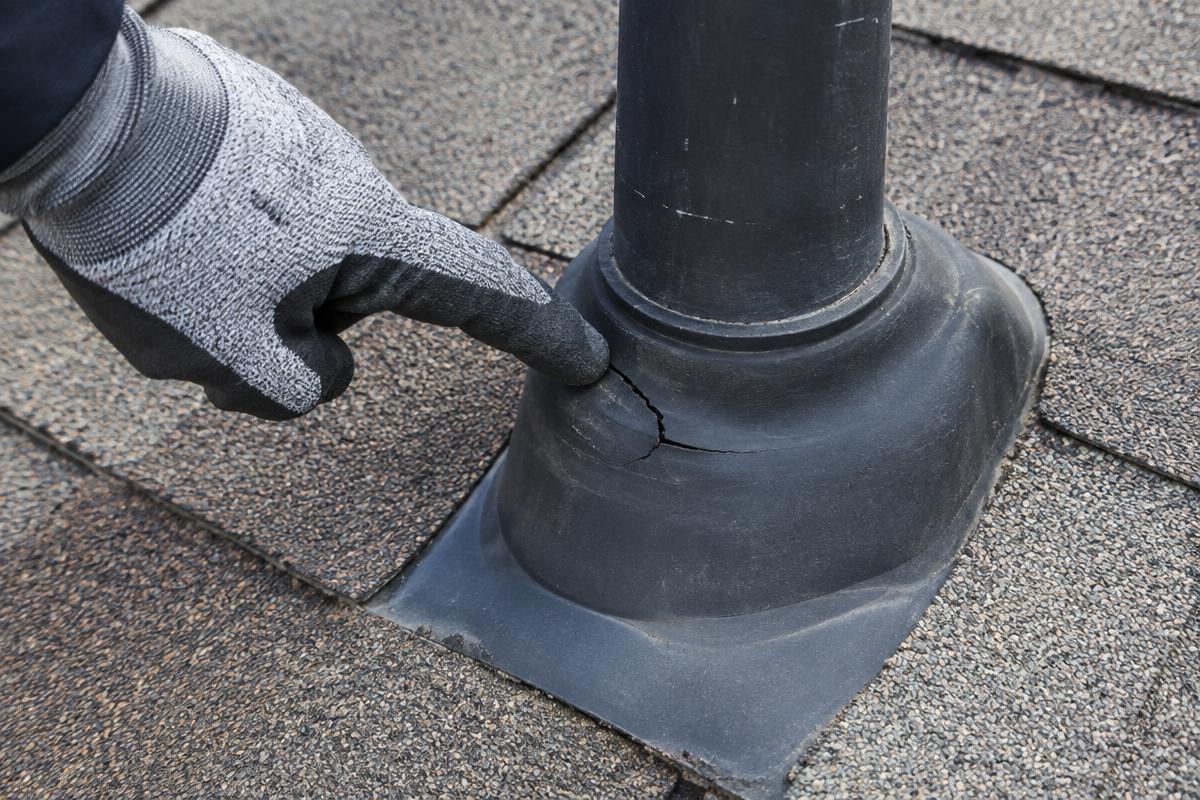
You usually cannot know the exact condition of the decking until the old shingles are off. Rotted or soft plywood or plank decking, often found near valleys, pipe boots, and eaves, has to be replaced sheet by sheet before new shingles go down. A fair estimate explains how decking replacement is priced and documented, usually with photos, rather than guessed at from the ground.
Flashing, valleys, and penetrations
Flashing around chimneys, skylights, walls, and valleys is where leaks most often start, so it has an outsized effect on both price and performance. A roof with several penetrations needs more cut metal, more step flashing, and more time compared with a simple rectangle roof. If your roof has a chimney, see our page on chimney flashing leaks for how that detail is built correctly.
Ventilation changes at replacement
Replacement is the easiest time to fix poor attic airflow. Adding or upgrading ridge vents, box vents, or soffit intake changes material and labor slightly, but balanced ventilation can extend shingle life and reduce moisture problems in the attic. A roofer should check your current intake and exhaust balance as part of the estimate, not add vents without explaining why.
Material tier and expected lifespan
Three-tab, architectural, and premium designer shingles differ in thickness, wind rating, and appearance, and each tier has its own price point. Choosing architectural shingles over basic three-tab, or considering a metal system through our metal roofing cost guide, changes both the upfront number and how long the roof is expected to perform.
Access, staging, and disposal
Trees close to the house, fences, pools, or tight side yards can slow down material delivery and debris removal. Dumpster placement, driveway protection, and how far crews have to carry bundles all affect labor time. Disposal itself is a real line item: tear-off debris is heavy and has to be hauled and dumped, and larger or multi-layer roofs generate more loads.
Permits and code requirements, in general terms
Many jurisdictions require a permit for roof replacement, and local code may set rules for things like ice barrier placement, ventilation minimums, or how many layers can remain before a tear-off is required. Requirements vary by location and can change, so ask your roofer what applies to your specific address rather than assuming a rule from a different town or a past project.
Season and scheduling
Shingles seal best in moderate temperatures, and demand for roofing work tends to rise sharply after storm season. Scheduling in a slower stretch of the year can sometimes mean a faster start date, while peak spring and summer months may mean a longer wait for an inspection and installation slot. Cold-weather installs are possible but may need extra steps for proper shingle sealing.
How to compare two replacement quotes
Lay the quotes side by side and check that each one lists the same scope: number of layers removed, decking price per sheet if more is found, underlayment type, ice and water membrane placement, ventilation plan, flashing details, cleanup and magnetic nail sweep, and warranty length for both materials and labor. A lower number that skips ice and water membrane or leaves out disposal is not actually a lower price once those items are added back in.
- Scope: tear-off layers, decking allowance, underlayment, ice and water membrane
- Ventilation plan and any changes to intake or exhaust
- Flashing and penetration details, especially valleys and chimneys
- Cleanup, disposal, and magnetic sweep for nails
- Material brand, tier, and color availability
- Warranty length for materials versus workmanship
- Payment schedule and what triggers each payment
Budgeting without a dollar figure
Even before you have a number, you can prepare. Ask for a measured square count, request the roofer's standard decking price per sheet so you know the ceiling if hidden rot is found, and ask what is and is not included so you can compare apples to apples across more than one estimate. Setting aside a contingency for decking or flashing surprises is a reasonable way to budget when the exact scope will not be known until tear-off.
Commercial-style complexity on residential roofs
Some homes have roof features more typical of light commercial buildings, such as a low-slope porch or garage section attached to a steep main roof. Mixed systems may need both shingle and membrane expertise, and transitions between the two are a common source of leaks if not detailed carefully. If your home has a flat section, see our flat roof repair page for how that part is handled differently from the steep slopes.
Weather windows in Central Illinois
Central Illinois sees wide temperature swings, freeze and thaw cycles, heavy spring rain, and occasional high wind and hail. These conditions affect scheduling around a dry, moderate-temperature window for proper shingle sealing, and they are also why many homeowners plan replacement proactively after noticing wind damage or granule loss rather than waiting for a full failure.
Planning around a project timeline
Ask for an estimated start-to-finish timeline before you sign, including how weather delays would be communicated. A realistic project runs from signed estimate to material delivery, to installation days, to a final cleanup and walkthrough where you can review the finished roof replacement together with the roofer before final payment.
What moves a replacement price
| Factor | Why it matters |
|---|---|
| Roof size (squares) | Materials and labor scale with area |
| Pitch | Steep roofs need more safety gear and time |
| Layers to tear off | Each layer adds labor and disposal |
| Decking repair | Usually priced per sheet once roof is open |
| Material choice | Shingle vs. metal has the largest effect |
| Complexity | Valleys, dormers, chimneys, skylights add flashing work |
| Ventilation | Adding ridge or intake vents adds cost |
Common questions
Why do two roof quotes differ so much?
Quotes often include different tear-off layers, decking allowances, underlayment, ventilation, and warranty terms. Compare line by line.
Can I get a price over the phone?
Only a rough idea. A firm price needs the roof measured and the decking and flashing checked.
Does a steeper roof always cost more than a flatter one of the same size?
Usually yes, because steep slopes slow down labor and require extra safety setup, even when the total square count is similar to a flatter roof.
If my roof only has one layer, do I still need a full tear-off?
A single layer can sometimes be recovered, but a tear-off is the only way to inspect and repair the decking underneath, so many homeowners choose it for a longer-term result.
Will adding ventilation during replacement delay the project?
Typically no. Ridge and intake vent work is usually completed within the normal installation timeline since the roof is already open.
What happens if the crew finds rotted decking after I already signed a quote?
A clear estimate sets a per-sheet decking price in advance, so added sheets are documented with photos and priced at that agreed rate rather than negotiated on the spot.
Does the time of year change what materials are used?
The materials are usually the same; what changes is installation technique, since shingles need warmth to seal properly and cold-weather jobs may use extra hand-sealing.
Is a permit always required for a full roof replacement?
That depends on your local jurisdiction's current code, so ask your roofer or local building department what applies to your address.
Request a Roof Replacement Evaluation
Describe it in the form and a local roofing partner will help you sort it out.