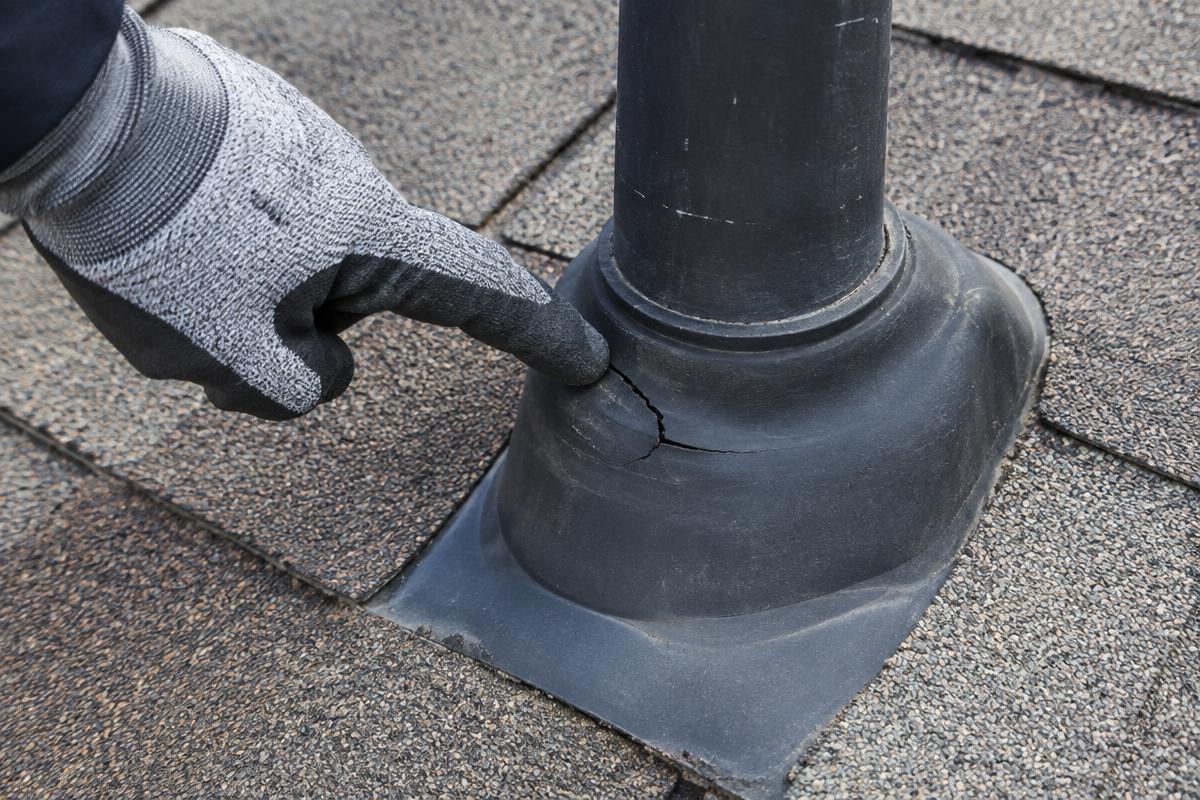
What you will see
A small stain, often near a bathroom, that grows after rain. In the attic, a wet ring around the pipe.
Likely causes
Most cases trace back to one of these:
- Cracked or split rubber collar
- Missing nails or exposed nails at the boot
- Squirrels chewing the rubber
How urgent is it?
Low to moderate. Small, but it keeps wetting the same spot. A quick, inexpensive repair.
Repair options
Depending on what the inspection finds:
- Replace the boot
- Install a longer-lasting boot style
- Replace wet decking if soft
When replacement is the smarter call
Rarely a reason to replace a roof on its own.
What an inspection should check
Because pipe boots are small and easy to overlook from the ground, an inspection should check every roof penetration, not just the one near a known stain. A thorough pass includes:
- Every plumbing vent pipe on the roof, checked for cracked, split, or sun-brittled rubber collars
- Nail heads at each boot base, looking for ones that have backed out or were never sealed
- Signs of animal damage, since squirrels and other wildlife sometimes chew exposed rubber boots
- Attic decking around each pipe for a wet ring or staining
- Boot style and material, since some older boots fail faster than newer long-lasting designs
Temporary fix vs. permanent repair
Caulk or roofing cement smeared over a cracked boot can slow a leak for a short time, but rubber that has already dried out and split will crack again in the same spot, usually within a season. The real fix is replacing the boot itself, ideally with a longer-lasting style, which is a quick job compared to most roof repairs. If the decking underneath has stayed wet for a while, that section may need to be replaced along with the boot.
What happens if you wait
Pipe boot leaks are usually small and slow, which is exactly why they get ignored longer than they should. Left alone, they keep wetting the same spot in the attic every time it rains, which can eventually soften decking and stain ceilings below, similar to the pattern seen with ceiling water stains. Because the fix itself is typically simple, waiting rarely saves money and often adds drywall or decking repair to what should have stayed a small job.
What to do today
If it is safe, take a look from the ground or a ladder at each visible pipe on the roof for cracked rubber around the base. Check the attic near bathroom and kitchen vent pipes for a damp ring. If you find a cracked boot, avoid walking on the roof to inspect closer unless you are experienced doing so, and schedule a repair rather than waiting for the next heavy rain to confirm it.
Cost drivers to expect
Pipe boot repairs are usually inexpensive relative to other roof work, but a few factors affect the total:
- Number of boots needing replacement in the same visit
- Roof pitch and height, which affect access time
- Whether decking underneath needs repair due to prior moisture
- Boot style chosen, since some long-lasting designs cost more upfront but hold up longer
How to describe it to the roofer
Mention which bathroom or kitchen the stain is near, since that often lines up with the vent pipe above it. Note whether the stain grows only after rain, and whether you noticed any cracked rubber if you looked at the roof. That detail usually lets the roofer go straight to the right pipe instead of checking every penetration from scratch.
Why Central Illinois weather wears out boots fast
Rubber pipe boots break down from UV exposure and temperature swings, and Decatur sees both strong summer sun and sharp freeze-thaw cycles through the year. That combination dries and cracks rubber faster than in milder, more stable climates, which is part of why pipe boots are one of the most common roof leak sources even on roofs that are otherwise in good shape.
Maintenance after the boot is replaced
New pipe boots still age, just more slowly than the one that failed. A yearly glance at visible boots from the ground, looking for cracking or discoloration in the rubber, can catch the next failure early. Keeping tree branches trimmed back from the roof reduces the chance of animal activity near boots, and confirming attic insulation is not pressed directly against the pipe where it enters the attic helps airflow and keeps condensation from forming nearby.
Questions worth asking before you approve the repair
Quick questions that help set expectations:
- Is the replacement boot a standard rubber design or a longer-lasting style?
- Will you check every pipe boot on the roof while you are up there, not just the leaking one?
- Is there any sign the decking underneath needs repair, or is it dry?
- How long should this boot style last before it needs attention again?
Seasonal timing for pipe boot repairs
Because the repair itself is quick, pipe boot replacement can usually happen in most weather windows outside of active storms or ice. That said, addressing a cracked boot found in fall before winter arrives avoids a season of freeze-thaw cycling working into the crack, and a spring check after winter is a reasonable routine time to catch any boots that dried out further over the cold months.
Common questions
Can I just caulk the crack?
It will crack again. Replacing the boot is the real fix.
How long do pipe boots usually last before cracking?
It varies by material and sun exposure, but rubber boots often need replacement well before the shingles around them wear out.
Can one cracked boot really cause a big stain?
Yes, if it leaks slowly every time it rains over many months, the cumulative water can spread a noticeable stain even from a small crack.
Are metal pipe boots better than rubber ones?
Some boot styles use metal collars with replaceable rubber inserts, which can last longer than an all-rubber design, though all boot materials eventually need attention.
Can squirrels really damage a pipe boot?
Yes, chewing on exposed rubber is a known cause of boot damage, especially on boots that are already drying out.
Do all the pipe boots on a roof need replacing at the same time?
Not necessarily, but if one has failed from age, nearby boots installed at the same time are often close behind and worth checking.
Does the roofer need to replace shingles to fix a pipe boot?
Usually only the shingles immediately around the boot need to be lifted or replaced, not a wider section of roof.
Can a pipe boot leak be mistaken for a plumbing leak?
Yes, since both can show up as a damp spot near a bathroom. Checking whether the stain appears only after rain helps tell them apart.
Get a Roof Inspection for Pipe Boot Leaks
Describe it in the form and a local roofing partner will help you sort it out.