Lifetime view
Metal costs more upfront than shingles. Its value comes from long life, so it pays off most if you plan to stay.
Panel type drives most of the price gap
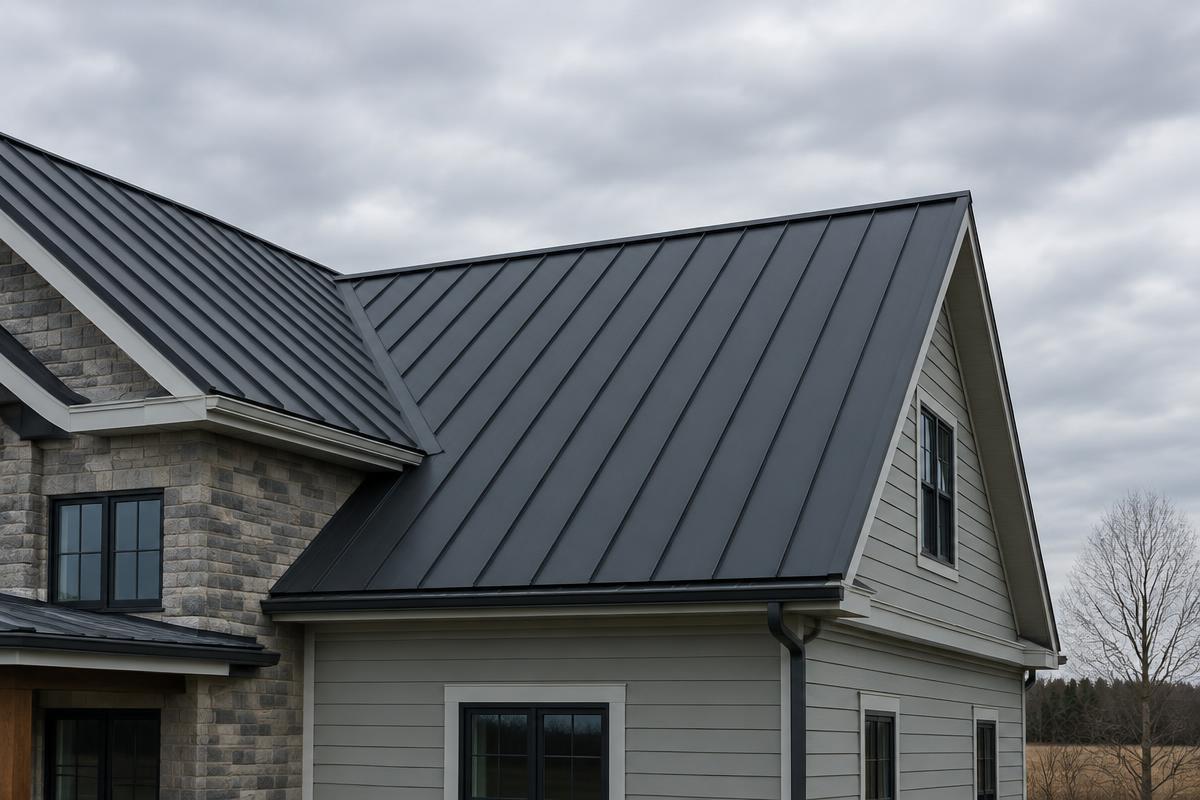
The biggest cost difference in metal roofing is between exposed-fastener panels and standing seam systems. Exposed-fastener panels are screwed directly through the metal, which is faster and less expensive to install. Standing seam uses hidden clips and interlocking seams, which takes more skilled labor and specialized tools but avoids exposed screw heads that can loosen over time.
Gauge, coating, and material tier
Metal roofing comes in different steel or aluminum gauges and with different paint or coating systems. Heavier gauge panels resist dents better and typically cost more. Premium coatings are more fade and chalk resistant over time, which affects long-term appearance even if it does not change day-one performance.
Roof size, pitch, and panel runs
Like any roofing material, metal is priced partly by the number of squares needed. Panel length matters too: a roof plane that allows one continuous panel run from ridge to eave is simpler than a roof with many breaks, hips, and valleys that require additional trim, cuts, and seams. Steeper roofs also add the same safety and access considerations as with shingle roofs.
Trim, flashing, and penetrations
Metal roofs rely heavily on custom-formed trim at ridges, eaves, rakes, valleys, and around penetrations like chimneys and pipe boots. More roof features mean more trim pieces and more time fabricating and installing them correctly, which is one reason complex roofs cost more per square than a simple gable.
Underlayment and decking considerations
Metal systems often call for a high-temperature synthetic or self-adhered underlayment, and in some cases a different fastening pattern than shingles. If the existing decking has soft spots, similar to what might be found under sagging decking in a shingle tear-off, it needs to be addressed before metal panels go down.
Tear-off versus installing over an existing roof
Depending on the situation and local code, some metal roofs can be installed over a single layer of existing shingles using furring strips, while others require a full tear-off. Each approach has different labor, so ask specifically which method is being quoted and why it was chosen for your roof.
Access and job site conditions
Handling long metal panels requires more room to maneuver than shingle bundles, and panels can be more awkward to carry around trees, power lines, or tight side yards. Site access can affect how a crew stages material and how long the job takes from delivery to final cleanup.
Comparing metal against shingles over time
Metal roofing usually costs more upfront than an asphalt shingle roof, but it is often chosen for a longer service life and lower long-term maintenance. Whether that trade-off makes sense depends on how long you plan to own the home, your appetite for a different appearance, and how much upfront cost you are prepared to spend.
How to compare metal roofing quotes
Metal quotes should specify panel profile and gauge, coating type and warranty, fastening or clip system, trim details at every edge and penetration, and whether the existing roof will be removed. A quote that just says "metal roof" without these specifics is hard to compare fairly against another bid.
- Panel profile: exposed-fastener or standing seam
- Gauge and base metal (steel or aluminum)
- Paint or coating system and its warranty
- Underlayment type
- Tear-off versus install-over plan
- Trim and flashing detail at valleys, penetrations, and edges
Budgeting for a metal roof
Ask each bidder for the same scope: same panel type, same underlayment, same tear-off decision, so the numbers reflect the same job. Because metal is a longer-term investment, also ask about touch-up paint availability and how repairs are typically handled years down the road, since that affects total cost of ownership even if it does not show up on day one.
The replacement process when switching to metal
Moving from shingles to metal typically follows the same overall sequence as any roof project: an initial inspection, a written estimate specifying panel type and tear-off plan, scheduling, the installation itself, and a final walkthrough. Because metal installation involves more specialized tools and trim fabrication, scheduling windows can sometimes run longer than a standard shingle job, so ask about expected timing early.
Weather considerations for metal roofing
Metal performs well across the temperature swings and wind common in Central Illinois, but installation itself still benefits from dry, moderate conditions for sealant cure and safe footing. Heavy wind or storm forecasts can delay panel installation days since long panels are harder to handle safely in gusty conditions.
Insurance and metal roofing
Insurance scope for a metal roof claim can differ from a shingle claim, since adjusters evaluate dents, seam integrity, and coating damage differently than granule loss. If you are weighing a metal upgrade after storm damage, see how the insurance roof replacement process generally works before deciding on a system.
Metal roof cost comparison
| Exposed fastener | Standing seam | |
|---|---|---|
| Upfront cost | Lower | Higher |
| Fasteners | Visible, need upkeep | Hidden |
| Typical use | Barns, shops, budget homes | Homes, premium builds |
| Long-term upkeep | Screw checks | Low |
Common questions
Why does standing seam cost more than exposed-fastener metal?
Standing seam uses heavier panels, hidden clips, and more labor-intensive trim and seaming.
Does metal roofing lower energy bills?
Reflective finishes can reduce heat gain in summer. Actual savings depend on the home, insulation, and ventilation.
Is standing seam always better than exposed-fastener metal?
Not necessarily better for every situation, but standing seam generally needs less long-term maintenance since it has no exposed screws that can loosen or leak over time.
Can a metal roof be installed over my existing shingles?
Sometimes, using furring strips, though this depends on the condition of the existing roof, local code, and the specific metal system chosen.
Do thicker metal panels cost noticeably more?
Heavier gauge panels typically cost more than lighter gauge ones, and the difference reflects better dent resistance rather than a change in appearance.
Does a complex roof shape make metal much more expensive than a simple one?
Yes, generally. More hips, valleys, and penetrations require more custom trim and labor, which raises the cost per square compared with a simple gable roof.
How does metal roofing cost compare long term to re-roofing twice with shingles?
It depends on how long you own the home and current material and labor conditions, but metal's long service life is often weighed against needing fewer future re-roofs.
Compare Metal Roofing Options
Describe it in the form and a local roofing partner will help you sort it out.