Why most homeowners choose them
- Thicker and heavier than 3-tab
- Higher wind ratings on most products
- Longer manufacturer warranties
- Dimensional look that hides small deck flaws
3-tab shingles
3-tab shingles are flat, single-layer shingles. Many makers have cut back their 3-tab lines. They are now mostly used for starter rows, repairs to match older roofs, or tight budgets.
Impact-resistant options
Some shingles carry a Class 4 impact rating. Some insurers offer discounts for them. Ask your insurer before choosing.
What makes a shingle architectural
An architectural shingle, also called a laminated or dimensional shingle, is built from two or more layers of asphalt-saturated material bonded together. That lamination is what separates it from a 3-tab shingle, which is a single flat layer cut into even tabs. The extra layer adds thickness, weight, and a shadow-line look that reads as depth on the roof from the street. It also changes how the shingle performs, not just how it looks.
Wind ratings in plain terms
Manufacturers test shingles for wind resistance and publish a rating, often in the range of 110 to 130 mph for many laminated products, compared to lower ratings common on older 3-tab lines. That number only means something if the shingle is installed to the manufacturer's nailing pattern, with the right number of fasteners placed in the nailing strip, not above it. A correctly rated shingle installed with high or missing nails can still blow off in a modest wind event.
The laminated look up close
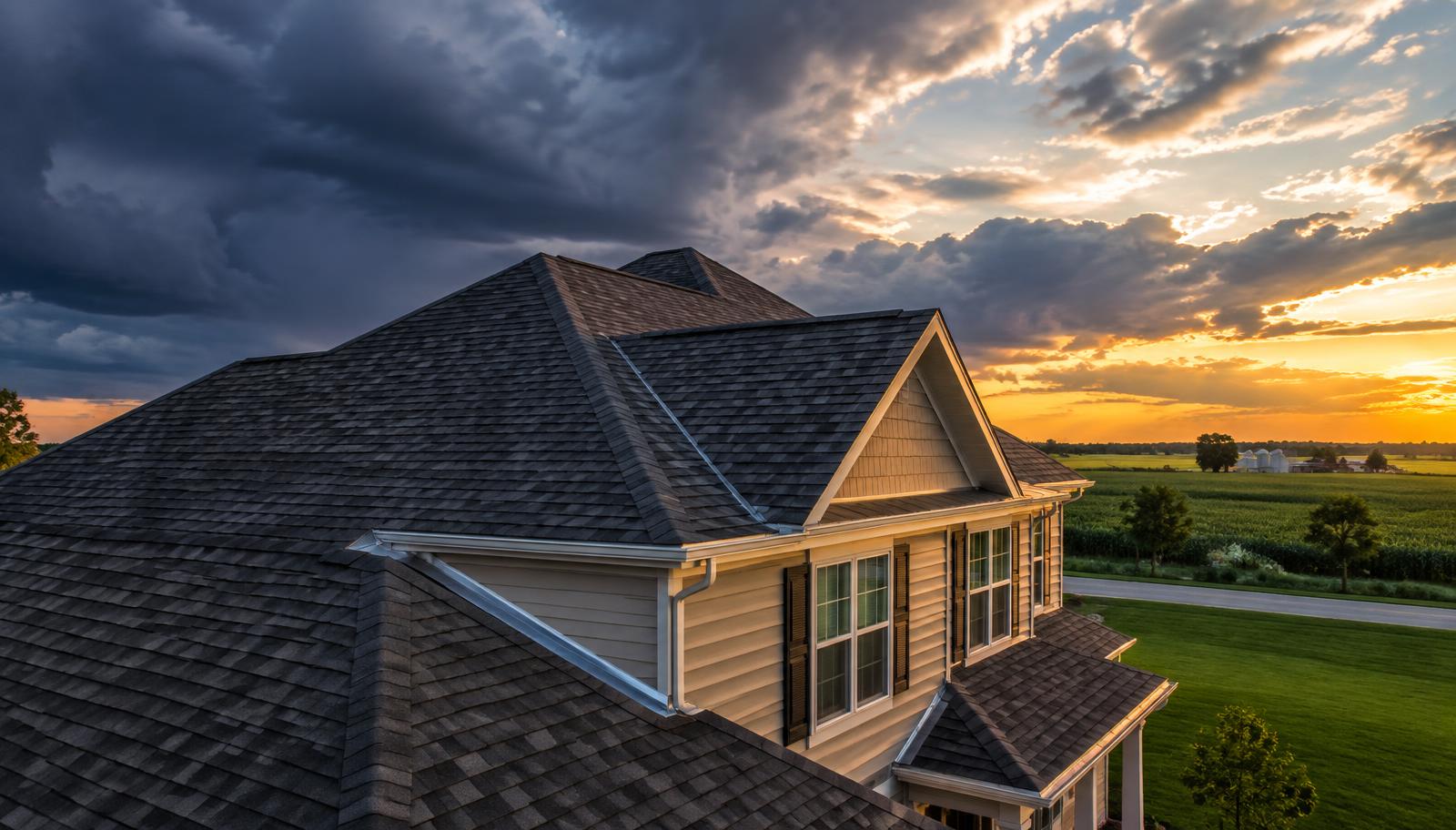
Because two layers are offset and bonded, laminated shingles create a random, staggered pattern that mimics wood shake or slate from a distance. Color blends also tend to look richer because the layered edges catch shadow differently than a flat 3-tab surface. Homeowners comparing samples in a showroom should also view them on a roof pitch in daylight, since color can look different in full sun versus shade.
Where laminated shingles can still fail
No shingle resists everything.
- Sealant strips that never bonded, often from a cold-weather install or dusty shingles
- Nails driven high, low, or at an angle instead of flat in the strip
- Granule loss on older shingles that leaves the asphalt mat exposed to UV
- Valleys and penetrations where flashing work matters more than the shingle itself
- Impact bruising from hail that fractures the mat without always tearing the surface
Comparing architectural to other shingle tiers
Within laminated shingles there are standard, premium, and designer tiers, which mostly differ in thickness, warranty length, and wind rating rather than basic function. A homeowner weighing tiers against a full system view should also read about asphalt shingle roofing as a whole, since decking, underlayment, and ventilation affect how any shingle tier performs over time.
How an inspection looks at architectural shingles
A roof inspection on a laminated shingle roof usually checks for lifted or missing tabs, cracked lamination at the nail line, granule loss patterns, and whether ridge caps (which are a different, often thicker product) are sealing properly. Soft spots felt underfoot can point to decking issues hiding under sound-looking shingles.
Lifespan factors, loosely
Many laminated asphalt shingles are rated for 25 to 30 years or more by the manufacturer, but actual field life depends heavily on attic ventilation, roof slope and sun exposure, the quality of the original install, and how many hail or wind events the roof has weathered. A shaded, well-ventilated north slope can easily outlast a hot, poorly vented south slope on the same house. Treat any lifespan number as a planning estimate, not a guarantee, and ask for the manufacturer's written warranty terms for specifics.
Process once you request a look
Most homeowners reach this page after noticing a problem or planning ahead for a roof replacement. The usual path is a request for contact, a scheduled inspection, a written summary of findings, options compared side by side, a firm estimate, and then scheduling once you are ready.
What good installation workmanship looks like
A well-installed architectural shingle roof shows straight, consistent coursing with no wavy lines along the eaves, tight nailing exactly in the nailing strip (never above it), properly woven or cut valleys depending on the method chosen, and ridge cap shingles that are a distinct, often heavier product rather than field shingles cut down to fake the look. Starter strip should run the full eave and rake, not just spot sections. A roofer willing to walk you through these details before tear-off, and show you the decking once it is exposed, is a good sign.
Signs of poor workmanship to watch for
- Nail heads visible on the shingle surface instead of covered by the course above
- Crooked or tapering courses that drift out of line toward one end of the roof
- Cut-corner valleys where shingles were trimmed sloppily instead of following a clean method
- Ridge caps that look thin or mismatched because field shingles were cut to fake a cap product
- Debris, old nails, or shingle wrappers left in gutters or around the yard after the job
Seasonal timing for a shingle project in central Illinois
Shingles seal best when temperatures are warm enough for the asphalt sealant strips to bond, generally spring through fall in this region. Installs can still happen in cooler weather, but hand-sealing of tabs may be needed since the factory sealant will not activate on its own in cold temperatures. Many homeowners also try to plan a replacement before late fall storm season or before deep winter freeze-thaw cycles start working on an already weak roof.
A worked decision example
Consider a 20-year-old roof with scattered granule loss, a couple of lifted tabs after a windstorm, and one soft spot near a valley. A full roof inspection finds the decking sound except at that one valley. In that case, a roofer might recommend a targeted repair now with a plan to budget for full replacement in the next few years, rather than an immediate tear-off, since the bones of the roof are otherwise still serviceable. Every roof is different, so this kind of side-by-side comparison, not a single rule of thumb, is what a real inspection should produce.
Questions worth asking before you sign
- What nailing pattern and number of nails per shingle will be used, and does it match the manufacturer spec for the wind rating you want
- Will starter strip and ridge cap be dedicated products, not cut field shingles
- What happens if soft decking is found once tear-off starts, and how is that priced
- What underlayment and ice and water membrane will be used at eaves and valleys
- How will debris and nails be cleaned up, including a magnetic sweep of the yard
Homeowner maintenance checklist after installation
Once new architectural shingles are on, a short seasonal routine helps protect the investment: look at the roof from the ground after any major storm for lifted or missing shingles, keep gutters and valleys clear of leaves and debris, trim back branches that scrape the surface or hold moisture, and schedule a walk-through inspection every couple of years even with no obvious problem. Catching a lifted tab or a failing pipe boot early is far cheaper than addressing ceiling water stains after water has already reached the attic.
Common questions
How long do architectural shingles last in central Illinois?
Lifespan depends on ventilation, install quality, sun exposure, and storms. Ask for the manufacturer's written warranty terms rather than relying on a single number.
Are architectural shingles better in wind?
Many laminated shingles carry higher wind ratings than 3-tab, but the rating only holds if they are nailed to the manufacturer's spec.
Does a laminated shingle look different from a 3-tab shingle on an old roof needing repair?
Yes, noticeably. If your roof is older 3-tab and a repair area uses laminated shingles, the patch will look thicker and shadowed differently. Ask the roofer how closely a match is possible.
Do all laminated shingles carry the same wind rating?
No. Wind ratings vary by product line and manufacturer, and some lines offer enhanced sealant or nailing patterns for higher ratings. Check the specific product sheet rather than assuming.
Can I mix 3-tab and laminated shingles on one roof?
It is possible on separate structures like a house and a detached garage, but mixing them on the same slopes usually looks inconsistent and is not common practice.
Do laminated shingles need different underlayment?
Not usually a different type, but manufacturers sometimes specify compatible underlayment and ice and water membrane products to keep the full warranty valid. Ask what the warranty requires.
Why do some architectural shingles look algae-streaked faster than others?
Algae resistance varies by product and by how much shade and moisture a slope holds. Many lines now include algae-resistant granules, but streaking can still appear over time, especially on shaded north slopes.
How long does a typical architectural shingle replacement take from first contact to finished cleanup?
Timelines vary by home size and weather, but the general path runs from an initial contact and scheduled inspection, through a written summary of findings and options, to an estimate, scheduling, the work itself, and a final walkthrough. Ask the roofer for a specific timeline once your scope is set.
Should I be home during the shingle tear-off and install?
It is not required, but many homeowners prefer to be reachable in case soft decking or another surprise is found once the old shingles come off, so a decision can be made quickly.
What happens to my old shingles after tear-off?
They are typically removed from the property as debris, often hauled in a dumpster or trailer brought for the job. Ask how disposal is handled as part of the estimate.
Talk About Your Architectural Shingle Options
Describe it in the form and a local roofing partner will help you sort it out.