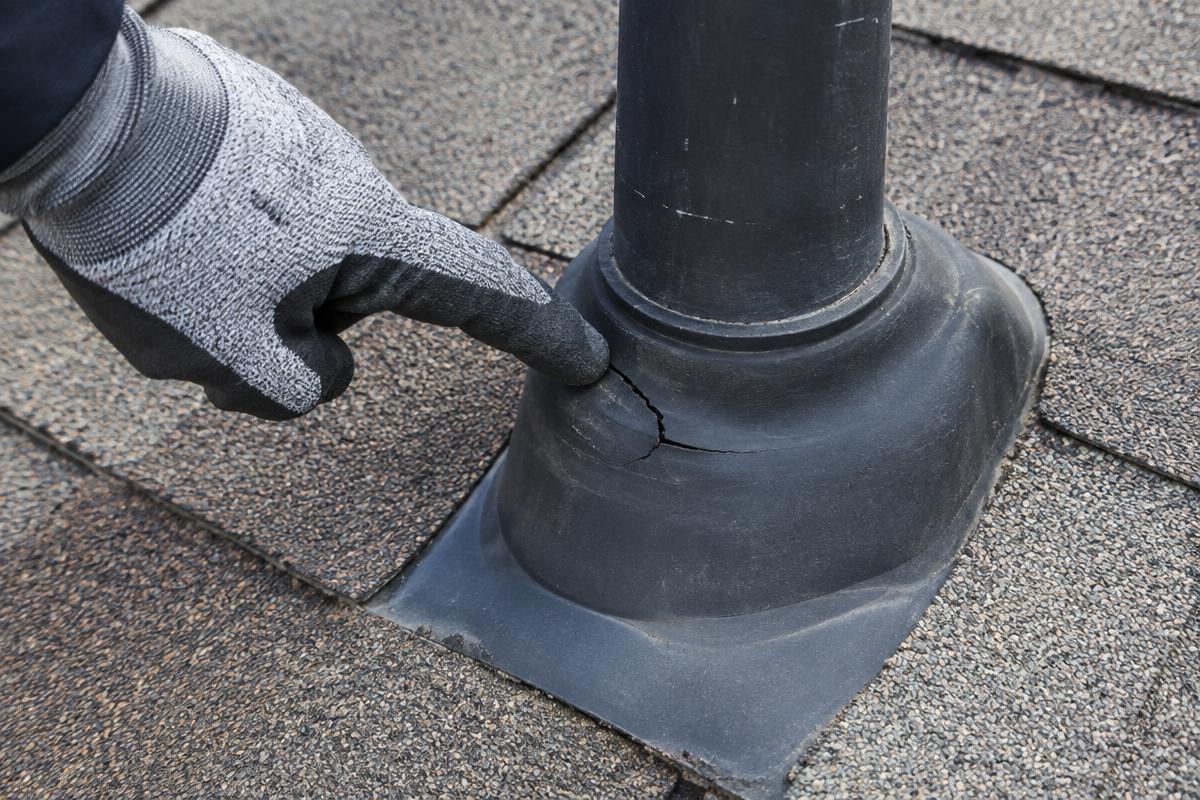
What you will see
Drips or new stains only during strong storms, often near walls, chimneys, or valleys.
Likely causes
Most cases trace back to one of these:
- Valley overloaded with water
- Clogged gutters backing water under shingles
- Wind pushing rain under flashing or ridge vents
- Short or missing drip edge
- Shingles laid too low on the slope for their rating
How urgent is it?
Moderate. It may be dry for weeks, then leak hard in the next storm. Get it traced while you remember where water showed up.
Repair options
Depending on what the inspection finds:
- Clean and resize gutters
- Re-flash walls and chimneys
- Rework the valley
- Replace ridge vent with a wind-rated product
When replacement is the smarter call
If heavy-rain leaks appear in many spots, or the roof has low-slope areas with the wrong material, a replacement may be the clean fix.
What an inspection should check
A storm-driven leak is easy to miss once the roof dries out, so a useful inspection does more than glance at the ceiling stain. Ask the roofer to walk the whole roof plane, not just the spot under the drip, since wind-driven water often travels sideways before it finds a gap. A thorough roof inspection should cover:
- Valleys and any place two roof planes meet, checked for granule buildup or standing debris
- Gutter and downspout flow, including whether water backs up under the first course of shingles
- Flashing at chimneys, walls, and skylights for gaps, rust, or lifted edges
- Drip edge length and whether it actually extends past the fascia
- Attic decking and insulation near the leak point for staining, mold, or soft wood
- Ridge vents and other roof penetrations for wind-driven entry points
Temporary fix vs. permanent repair
A tarp, roof cement, or sealant bead can buy time until a dry stretch of weather allows real work, but none of these hold up to repeated heavy rain. Temporary measures are meant to stop active dripping, not to replace proper flashing or a reworked valley. If the roofer tells you the fix found during the visit is a stopgap, ask what the permanent version of that repair looks like and when it needs to happen. Some homeowners compare roof repair against a full roof replacement once they learn how many weak points the storm exposed.
What happens if you wait
Heavy-rain leaks are deceptive because the roof can look fine between storms while water keeps finding the same path inward. Left alone, that moisture can rot decking, stain ceiling drywall, feed mold growth in the attic, and loosen insulation. By the time a leak shows up indoors, water has often been moving through the roof assembly for a while. Waiting through another season of Central Illinois storms, heavy spring rain followed by summer downpours, usually turns a single-spot repair into a larger decking replacement.
What to do today
If water is actively coming in, move furniture and electronics out of the drip path and set a container to catch the flow. Take photos of the stain or drip location and jot down the date, wind direction, and rainfall intensity if you remember it. Do not climb onto a wet roof to look for the source yourself. Call to schedule an inspection while the evidence, wet insulation, a fresh stain, debris in a valley, is still visible rather than waiting for it to dry and disappear.
What drives the cost of this repair
Pricing depends on how many weak points the storm found and how hard they are to reach. A single re-flashed wall or a cleaned valley costs far less than tracing a leak across multiple slopes or replacing rotted decking. Material choice, access and roof pitch, the extent of any interior damage, and whether matching shingles are still available all factor in. A roof repair cost guide can help you understand the general ranges, and comparing repair vs. replace is worth doing if the inspection turns up more than one problem area.
How to describe it to the roofer
Be specific about timing and conditions. Tell the roofer whether the leak only shows up during heavy or wind-driven rain, which direction the wind was blowing, and where inside the house the water appeared relative to the roof above it. Mention whether gutters were clogged or overflowing at the time, and note if the dripping started suddenly after a known storm. This detail helps the roofer aim the inspection instead of searching the entire roof from scratch.
Central Illinois rain patterns and your roof
Decatur-area storms often bring short bursts of intense rain along with gusty wind, a combination that overwhelms roofs that handle a steady drizzle just fine. Freeze-thaw cycles over winter can also loosen flashing seals, so a roof that was watertight in fall may develop a gap by spring. If storm activity caused the leak, it is worth asking whether a storm damage roof repair evaluation or a formal storm roof inspection makes sense alongside the standard leak check.
Common questions
Why not in every rain?
Light rain flows normally. Heavy or wind-driven rain overloads small gaps.
The ceiling stain is dry now. Should I still get it checked?
Yes. A dry stain does not mean the path is sealed. The same gap will likely leak again in the next heavy storm.
Can gutter cleaning alone fix a heavy-rain leak?
Sometimes, if clogged gutters were the main cause. But a full inspection should rule out flashing or valley issues too.
Will the roofer need to get on the roof in the rain?
No. Inspections are done in dry conditions. The roofer relies on your description of the storm and visible evidence afterward.
Does a heavy-rain leak mean my whole roof is failing?
Not necessarily. It often points to one or two weak spots, but widespread leaking across several areas can indicate broader wear.
How long can I wait before scheduling an inspection?
Sooner is better. Evidence fades as things dry, and the next storm can make the damage worse.
Should I check my attic myself first?
A quick, safe look with a flashlight for fresh staining or wet insulation can help you describe the issue, but leave climbing and probing to the roofer.
Request Roof Help for a Heavy-Rain Leak
Describe it in the form and a local roofing partner will help you sort it out.