Signs to look for from the ground
- Shingles in the yard or gutters
- Dented gutters, downspouts, or vents
- Granules piled at downspout outlets
- Lifted or folded shingle edges
- New water stains inside
Be careful after storms
Out-of-town crews often go door to door after big storms. Ask for a local address, proof of insurance, and a written estimate before signing anything.
What counts as storm damage
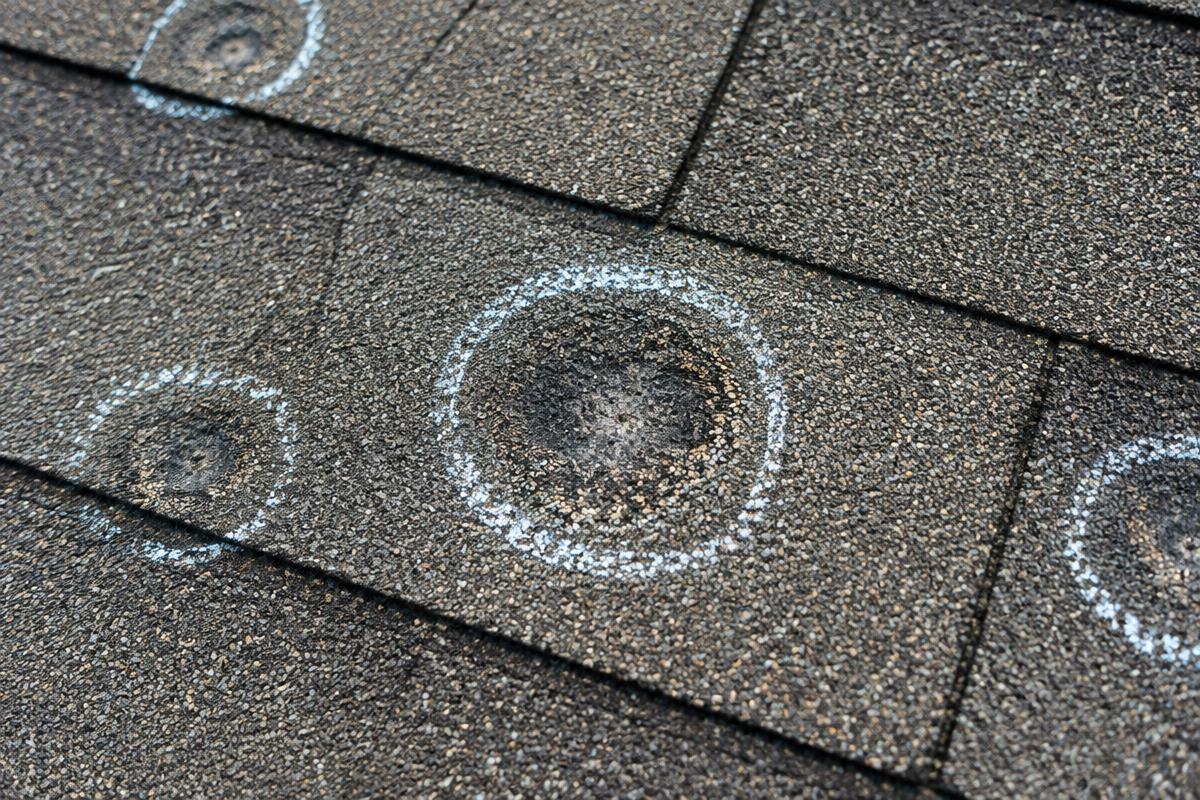
Storm damage covers a range of problems caused by a single weather event: hail bruising, wind uplift, blown-in debris, and heavy rain finding a weak spot. It is useful to think of it as a category, not one specific repair, because hail and wind often strike the same roof at the same time and leave different kinds of marks.
How Central Illinois weather stresses a roof
Decatur sits in a part of the state that sees a wide mix of weather stress over a year.
- Spring and summer storms that bring hail and straight-line wind gusts
- Heavy, fast rainfall that exposes weak flashing and clogged drainage
- Hot summers followed by cold winters, which stresses sealants and fasteners
- Repeated freeze and thaw cycles that widen small cracks and open seams
- Large temperature swings between day and night that expand and contract roofing materials
How the repair process works
The process is similar for most storm calls, whether the damage is from hail, wind, or wind-driven rain.
- You contact the referral line and describe what you noticed
- A local roofing partner schedules an inspection of the roof, gutters, and attic
- Findings are documented with photos of each affected slope
- You review repair or replacement options based on what was found
- A written estimate is provided before any work begins
- Work is scheduled, carried out, and the site is cleaned up
- A walkthrough confirms the repair before the job is closed
Why an inspection matters even without a visible leak
Storm damage is not always obvious from the ground. A shingle can lose its seal or crack its mat without an active leak showing up right away. Left unchecked, small damage tends to grow with the next round of rain or wind, which is why an inspection soon after a storm is worth scheduling even if the roof looks fine from the yard.
What happens if repairs are delayed
Delaying a storm repair rarely makes it cheaper. A cracked shingle mat or an unsealed tab can let water travel under the roofing layer long before a stain shows up on the ceiling. By the time interior damage is visible, decking or insulation may already be wet, which can turn a simple shingle repair into a larger project involving decking or interior drywall work.
Repair or full roof replacement
Not every storm means a new roof. Isolated hits on a newer roof are often repairable. Widespread bruising, many unsealed tabs across multiple slopes, or damage on a roof that was already near the end of its service life usually points toward replacement. A side-by-side look at the tradeoffs is covered on the repair versus replace page.
Protecting the home until repairs happen
If a storm has left an active leak or an opening in the roof surface, temporary protection matters more than scheduling convenience. See emergency tarping for how a short-term cover is installed to limit water intrusion while a permanent repair is planned.
How storms affect different roof types
Asphalt shingle roofs, metal roofs, and flat or low-slope roofs all react to storms in different ways. Shingles can bruise or lift. Metal panels can dent or loosen at the fasteners. Flat roofing membranes can tear at seams or around curbs and drains if debris strikes them or ponding water sits too long. Whatever the roof type, the questions during an inspection are similar: is the surface still intact, and is water getting underneath it? For flat systems specifically, see flat roof repair for how those checks differ from a sloped shingle roof.
Insurance and the storm repair timeline
Many storm repairs move alongside an insurance claim, though coverage decisions always rest with the insurer, not the roofer. Understanding roughly how a claim typically moves from documentation to adjuster visit to approved scope of work can help you plan around the repair timeline. See the roof insurance claim process for a general walkthrough, and insurance roof replacement if the inspection points toward a full replacement rather than a repair.
Rural and wide-coverage scheduling after a regional storm
A storm that hits Decatur often affects a wider stretch of Central Illinois at the same time, from nearby towns to more rural properties. When many homes need attention at once, scheduling may take a bit longer than it would after an isolated, single-property issue. Being ready with your contact information, address, and a description of what you observed can help move things along once an inspection slot opens up.
Commercial buildings and storm damage
Storm damage is not limited to homes. Commercial roofs, often flat or low-slope, can suffer membrane tears, loosened flashing at curbs, or clogged drains that lead to ponding after heavy rain. See commercial roofing and commercial roof repair for how storm response differs for business properties, where downtime and interior stock are added concerns beyond the roof itself.
Keeping records for future reference
Even outside of an insurance claim, keeping a simple record of storm dates, photos, and any repair work done is useful. It gives the next inspector context on what has already been addressed and helps track whether a roof is approaching the point where full replacement, rather than another round of repairs, is the more sensible path.
Common questions
How soon should I get inspected?
As soon as it is safe. Most insurers have time limits for reporting damage, so check your policy.
Does every storm need a professional inspection?
Not always, but it is reasonable after any storm with hail, strong wind, or large debris in the yard. Damage is often easier to miss than people expect.
Can storm damage be hidden for months?
Yes. Cracked shingle mats and lifted seals do not always leak right away. A problem can sit quietly until a heavier rain or a windy stretch pushes water underneath.
Should I wait until spring to deal with fall storm damage?
Waiting through a freeze and thaw winter with existing damage usually makes things worse, since moisture that gets into decking can freeze and expand.
Will the same storm affect my whole roof evenly?
No. Wind direction, slope exposure, and roof age all affect which sections take the most damage, which is why each slope is checked separately.
Do older roofs handle storms differently than newer ones?
Yes, generally. Aging shingles have less flexibility and weaker seals, so the same hail or wind event can cause more damage on an older roof than a newer one.
What should I do first after noticing storm damage?
Document what you can see safely from the ground, avoid climbing onto the roof, and arrange an inspection so any damage is identified before it spreads.
Can a single storm cause both hail and wind damage at once?
Yes, this is common in Central Illinois storms, where hail cores and strong straight-line winds often occur together, leaving a mix of bruising and lifted or missing shingles.
Do gutters need to be checked along with the roof after a storm?
Yes. Dented or loosened gutters affect drainage, and debris caught in them can hide additional signs of roof damage above.
Request Roof Help After a Storm
Describe it in the form and a local roofing partner will help you sort it out.