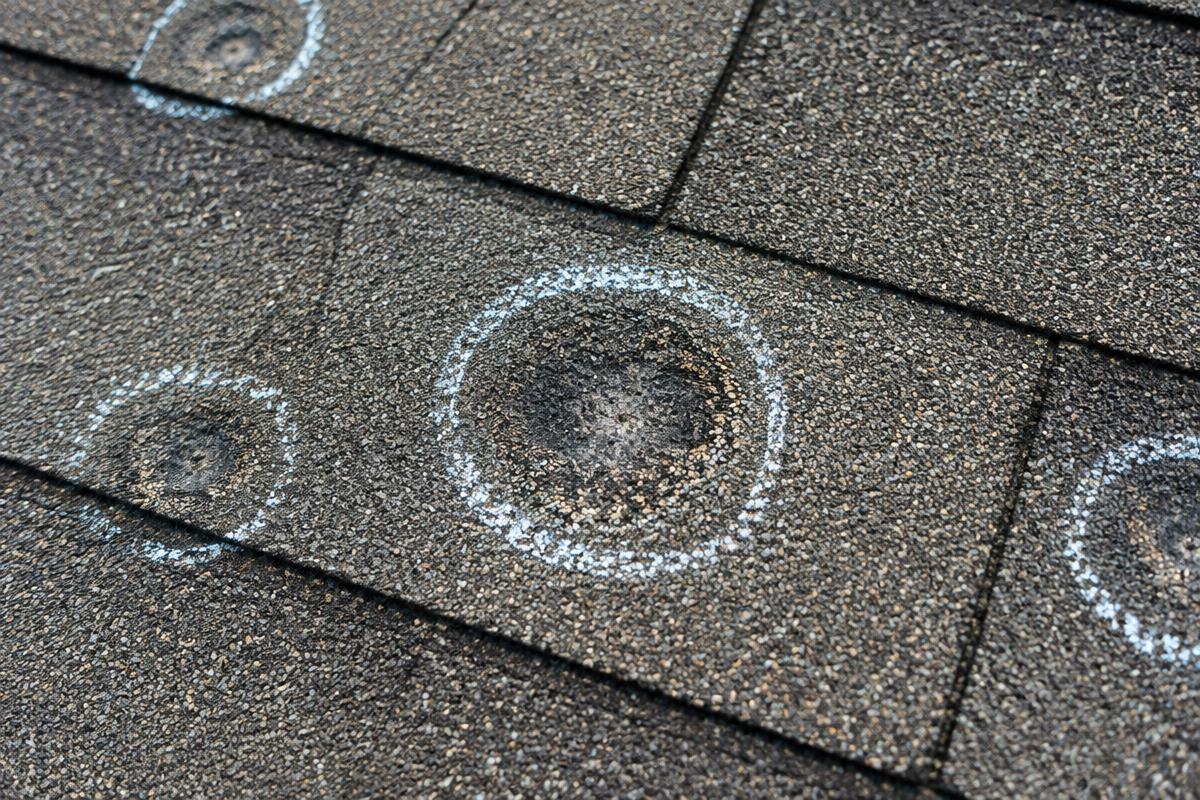
What should be documented
- Each slope, with overview and close-up photos
- Hail hits marked and counted per test area
- Damaged vents, flashing, gutters
- Interior stains and attic moisture
Avoid pressure
You do not have to sign anything at the door. Get a written report first.
Why timing matters
Wind and hail damage does not always announce itself. A crease in a shingle or a bruised pipe boot can sit quietly for months before it turns into a leak. In central Illinois, where wind-driven rain and sudden temperature swings are common, a small opening can let moisture into the decking long before a stain shows up on the ceiling. Getting the roof looked at while the damage is fresh, and clearly tied to a known storm date, makes the rest of the process easier to document whether or not you end up filing a claim.
What an inspector physically checks
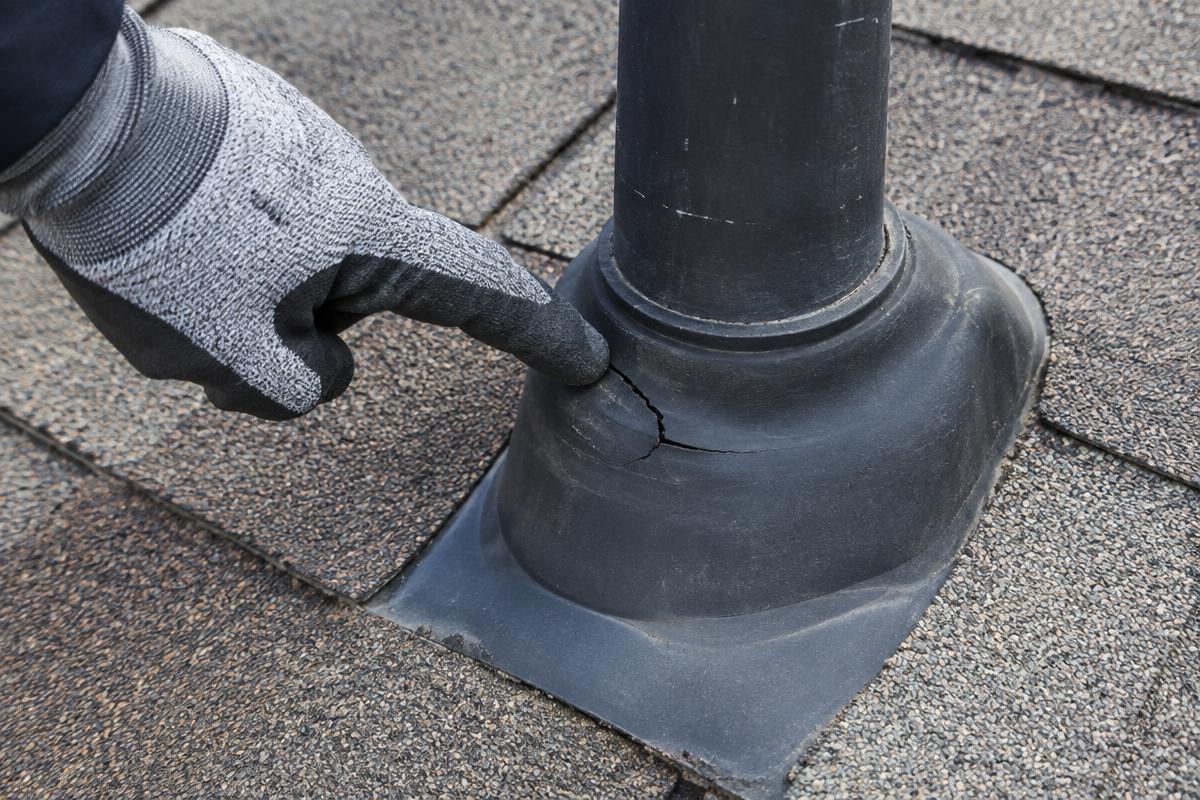
A thorough storm inspection is more than a glance from the driveway.
- Each roof slope for granule loss, creased or lifted shingles, and missing tabs
- Soft metals such as gutters, downspouts, vents, and flashing for hail dents
- Ridge caps and hip lines for wind lift or cracked sealant
- Valleys and pipe boots, which are common early leak points
- The attic for new moisture staining, wet insulation, or daylight through the decking
Ground-level versus roof-level checks
Some signs can be seen safely from the ground: dented gutters, displaced shingles visible with binoculars, or debris in the yard. Other damage, like a bruised shingle mat that has not yet lost granules, is only visible up close. This is why a ground survey alone is not usually enough to say a roof is undamaged.
How hail damage differs from wind damage
Hail typically leaves random, scattered bruising or dents across a slope rather than a single pattern. Wind damage tends to concentrate at edges, corners, and ridges, where uplift forces are strongest. An inspector will usually note which pattern they see, since insurers often ask for this distinction. See hail dent damage and wind-damaged shingles for more on how each type looks up close.
Documentation that actually helps later
Photos are the backbone of any later conversation with an insurer. Useful documentation includes an overview shot of each slope, close-ups of specific damage with something for scale, and the date the storm occurred if you know it. Keep any weather alerts, neighborhood social media posts, or local news mentions of the storm if you have them; they are not proof of damage to your roof specifically, but they can support the timeline.
Seasonal factors in central Illinois
Storm inspections in this region have to account for more than the storm itself. Freeze-thaw cycles through late fall and winter can work a small crease or lifted tab into a bigger opening, since water that gets underneath a shingle can expand when it freezes. Heavy spring rain tests any weak spot in flashing or valleys almost immediately, and summer heat can make brittle, aged shingles crack more easily when an inspector or contractor walks the roof. None of this changes whether damage is storm-related, but it does affect how quickly a small issue can turn into a bigger one.
Inspection versus full roof evaluation
A storm inspection is usually narrower than a full condition assessment. It focuses on damage that can be tied to a specific weather event, rather than general wear like aging underlayment or declining ventilation. If you also want a broader look at overall roof health, that is closer to what a roof inspection covers, and the two can sometimes be done in the same visit.
Keeping multiple inspections consistent
If more than one inspection happens, such as one before filing a claim and then the adjuster's own visit, it helps if the findings are at least pointing to the same areas of damage. Sharing your own photos and notes with whoever inspects the roof next can reduce back-and-forth later.
Consequences of waiting
Delaying an inspection does not just risk interior damage. Some insurers ask when damage was discovered, and a long gap between a known storm and your report can raise questions. Exposed or lifted shingles left through another round of rain or freeze-thaw cycles can also turn a simple missing or blown-off shingle repair into a larger decking issue.
What happens after the inspection
If damage is found, you decide what to do next. Some homeowners move straight to contacting their insurer; others want a second look or a written report first. Either way, you are not required to sign a contract or an authorization at the door just because an inspector showed up. If the roof needs a temporary cover before you can get further along in the process, see emergency roof tarping. If a claim is the next step, the roof insurance claim process walks through what typically happens from there.
Common questions
How soon after a storm should I get a roof checked?
As soon as it is safe. Dated photos taken soon after the storm help if you decide to file a claim.
What should a storm inspection include?
Shingles, soft metals like vents and gutters, flashing, and the attic for signs of new leaks.
Can an inspection confirm the exact date my roof was damaged?
Not precisely. An inspector can describe the type and pattern of damage, but tying it to a specific storm date usually relies on weather records and your own notes, not the roof alone.
Does every hail hit need to be marked on the roof?
Inspectors often mark test squares on a few slopes rather than every hit on the whole roof, since this is a common way to estimate overall damage spread.
What if the inspector and I disagree about whether something is storm damage?
You can ask for photos and a written explanation, or get a second inspection. Only your insurer makes the final coverage decision.
Will an inspector go into my attic?
Many do, since attic moisture and light penetration are useful signs of roof damage that are not visible from outside.
Is a drone inspection as reliable as someone walking the roof?
A drone can capture useful overview photos, especially on steep or fragile roofs, but close-up checks of soft metals and seams often still require a closer look.
Should I get my gutters checked during a storm inspection?
It is worth asking. Gutters and downspouts are soft metal and often show hail dents even when the roof damage is harder to see.
Request a Storm Roof Inspection
Describe it in the form and a local roofing partner will help you sort it out.