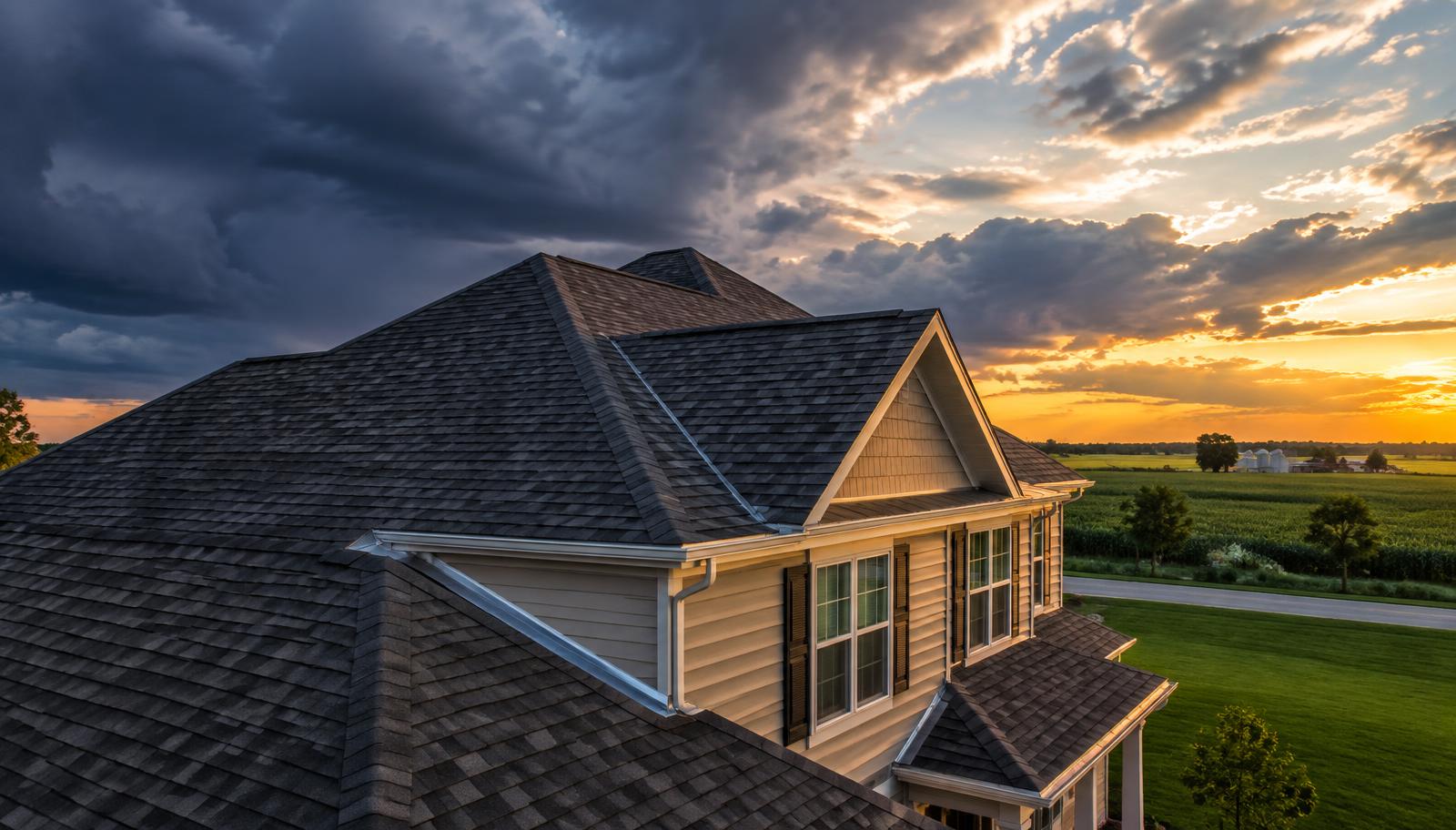
Signs of wind damage
- Missing shingles, often near ridges and edges
- Creased tabs with a visible line
- Unsealed shingles that flap
- Lifted ridge caps and drip edge
How it is repaired
Missing and creased shingles are replaced and hand-sealed. If many tabs are unsealed across the roof, replacement may be more reliable.
How wind uplift actually damages a roof
Shingles are designed to lie flat and stay sealed under normal wind loads, but strong gusts create uplift pressure, especially near edges, ridges, and corners where wind catches the roof plane. Once a shingle's seal breaks, it can flap in future wind events even if it is not immediately torn off, which slowly widens the damage.
What an inspection looks for after wind
Wind damage is sometimes subtle compared to hail, so the inspection focuses on edges and seals.
- Lifted or unsealed shingle tabs, especially at ridges and rakes
- Creased shingles with a visible fold line across the tab
- Missing shingles or exposed underlayment in patches
- Loose or lifted ridge caps and drip edge
- Pulled or loosened fasteners around vents and flashing
Why creased shingles cannot just be glued down
A crease is a break in the shingle's fiberglass mat, not just a cosmetic fold. Sealant or adhesive can hold a creased shingle in place temporarily, but the mat is already compromised, so it tends to crack further with heat and cold cycling. Replacing creased shingles individually is the more durable fix.
Process from report to repair
After contact and scheduling, the inspection documents each affected area, you review the findings and options, and a written estimate is provided before work starts. For wind damage specifically, work often includes replacing missing shingles, re-sealing lifted tabs, and securing ridge caps and drip edge that came loose.
Cost drivers for a wind damage repair
Several factors affect the scope of a wind repair without any specific price being assumed.
- How many shingles are missing versus simply unsealed
- Whether ridge caps, drip edge, or flashing also need resecuring
- Roof pitch and height, which affect access and labor time
- Matching availability for the existing shingle color and style
- Whether decking underneath was exposed to rain before the repair
When wind damage points to full replacement
Scattered missing shingles across a roof that is otherwise in good shape are usually repairable. A roof with widespread unsealed tabs, multiple creased areas, or damage layered on top of an aging shingle system is a different situation, and replacement may hold up better than a series of patches. The repair versus replace comparison walks through that decision in more detail.
Protecting the home if the roof surface is open
If wind has torn away a section of roofing and left decking exposed, getting it covered quickly matters more than anything else. See emergency roof tarping for how that temporary cover is installed before a full wind repair can be scheduled.
Wind damage on metal and flat roofing
Wind does not only affect shingles. On metal roofing, high gusts can work screws loose at exposed fasteners or stress seams on standing seam panels, especially near edges and ridges. On flat or low-slope roofs, wind can lift membrane edges or peel back flashing at curbs and parapets. See exposed fastener metal and flat roof repair for how those systems are checked after a wind event.
Why wind damage often shows up in clusters
Because wind pressure concentrates at corners, ridges, and roof edges, damage is rarely spread evenly. A roof might show several missing shingles in one corner while the rest of the slope looks untouched. Recognizing this pattern helps an inspection focus attention where uplift pressure was highest, rather than assuming the whole roof took the same amount of stress.
Wind damage around chimneys and roof penetrations
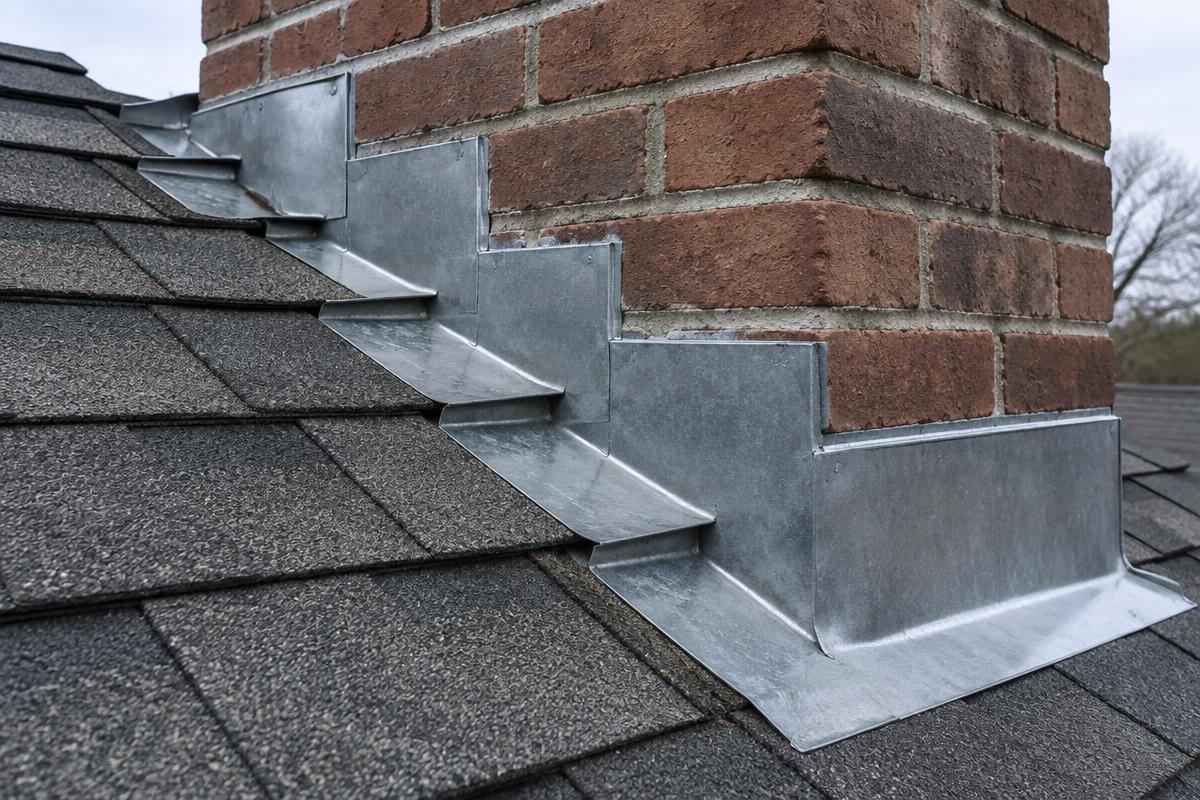
Strong wind does not only affect open shingle fields. It can work at the edges of flashing around chimneys, loosen pipe boots, and stress ridge vents, especially where fasteners were already a little loose. See chimney flashing leaks and pipe boot leaks for how those specific penetration points are checked after a windstorm.
What to expect during the findings conversation
After the inspection, you should get a clear picture of which areas were affected by wind specifically, as opposed to any older wear that was already present. This distinction matters for deciding scope, since a roof with a mix of old wear and new wind damage may need a different plan than one with isolated, storm-caused issues on an otherwise sound roof.
Common questions
Can creased shingles be glued back down?
A crease breaks the shingle mat. Glue may hold briefly, but replacing creased shingles is the lasting fix.
How strong does wind need to be to damage a roof?
It depends heavily on the roof's age, fastening, and exposure. Gusts that leave one roof untouched can lift shingles on another roof nearby if the seal was already weak.
Can wind damage happen without any shingles going missing?
Yes. A broken seal or a crease can happen without a single shingle leaving the roof, which is why ground-level checks alone are not reliable.
Does roof shape affect wind damage patterns?
Yes. Corners, ridges, and rake edges generally see the highest wind pressure, so damage is often concentrated there rather than spread evenly.
Can wind damage affect metal roofing panels?
Yes, especially at exposed fasteners or panel edges if clips or screws loosen, though well-installed metal roofing generally resists wind uplift well.
Is it normal for a few shingles to blow off every storm?
No. Recurring missing shingles in the same area usually points to a sealing or fastening issue that is worth having checked rather than repeated one-off repairs.
How soon do unsealed shingles need attention?
Sooner rather than later. An unsealed tab can flap in the next windy day and tear loose, turning a simple reseal into a shingle replacement.
Does the age of the shingle sealant affect wind resistance?
Yes. Sealant strips weaken with age and sun exposure, so an older roof can lose shingles in wind that a newer roof with intact seals would withstand.
Can wind drive rain under shingles even if none go missing?
Yes. Strong, sideways wind can push rain under lifted tabs or loose ridge caps even when every shingle is still technically in place.
Talk About Your Wind Damage Repair
Describe it in the form and a local roofing partner will help you sort it out.