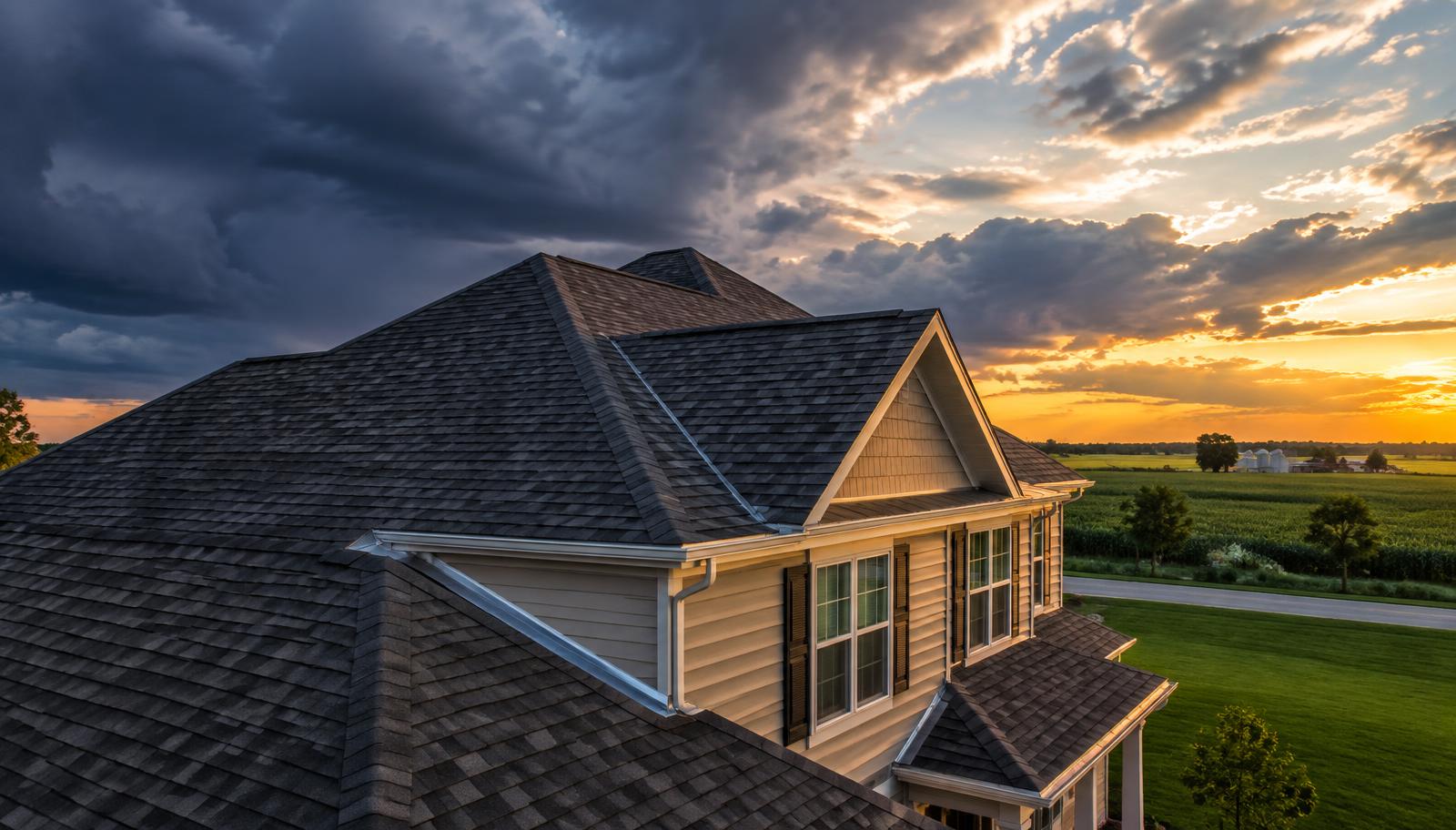
What a roof repair usually covers
Repairs are best when the rest of the roof still has life left.
- Replacing missing or creased shingles after wind
- Resealing or replacing pipe boots and vent flashing
- Re-flashing chimneys, walls, and skylights
- Fixing open valleys and nail pops
- Replacing small sections of soft decking
Why central Illinois roofs need repairs
Decatur sees hard spring storms, summer heat on dark shingles, and many freeze-thaw cycles each winter. Each cycle pushes water deeper into any small gap. That is why a minor leak in March can become a stained ceiling and wet insulation by the next winter.
Repair or replace?
If problems are spread across many slopes, the shingles are brittle, or the roof is near the end of its life, repair money may be wasted. An honest inspection should tell you which side of that line your roof is on.
How the repair process works
A straightforward repair follows a clear path: you reach out, a roof inspection is scheduled, the roofer shares findings, you review repair options, you get a written estimate, a work date is set, the repair is completed, and the area is cleaned up and walked through with you before the visit ends.
- Contact: describe the problem and share photos if you have them
- Inspection: the roof and attic are checked for the real cause
- Findings: you learn what is wrong and how it happened
- Options: repair, patch, or a note that replacement may fit better
- Estimate: a written scope and price before work starts
- Scheduling: a date is set around weather and materials
- Work and cleanup: the fix is made and debris is cleared
- Walkthrough: you see the repaired area before sign-off
What drives repair cost
Repair pricing is shaped by access, materials, and scope rather than a flat rate. A steep roof takes longer to work safely. Matching older shingles can take extra searching. A single pipe boot swap is a small job; a run of damaged decking under several shingle courses is a bigger one. For a general sense of how estimates get built, see how roofing estimates work.
- Roof pitch and height, which affect labor time and safety setup
- Number and type of penetrations: pipe boots, vents, chimneys
- Shingle availability and how close a color match can get
- Whether decking underneath needs to be opened up and replaced
- How many separate problem areas exist on the roof
What happens if you wait
A small gap in flashing or a cracked pipe boot rarely causes a dramatic failure right away. The damage is usually slow: water tracks along rafters, soaks insulation, and darkens decking over months. By the time a ceiling water stain shows up inside, the leak may have been active for a while. Waiting through another freeze-thaw winter often turns a shingle-level fix into a decking repair.
Central Illinois weather and repair timing
Decatur sees sharp temperature swings, hard spring storms, and summer heat that bakes dark shingles. Wind can lift shingle tabs that then let water underneath on the next rain. Many homeowners schedule a repair in spring or fall when temperatures help sealants cure, though active leaks should not wait for ideal weather.
Repairing a roof with existing storm damage
If recent wind or hail is part of the picture, a repair conversation often runs alongside a possible claim. See wind damaged shingles and hail dents for what each type of damage tends to look like, and the insurance claim process for how documentation and repair estimates typically fit together.
Questions to ask before you approve a repair
A clear estimate should answer each of these before you sign anything:
- What exactly failed, and why
- What specific materials will be used
- Whether decking will be opened up to check for rot
- Whether the fix addresses the cause or only the visible symptom
- What the written scope says about cleanup and disposal
What good repair workmanship looks like
A well-done repair blends into the surrounding roof: shingle color and exposure match the existing courses, nail placement follows the manufacturer pattern, and flashing is formed to shed water rather than caulked over a gap. Poor workmanship often shows up as visible tar patches, mismatched shingle lines, or fasteners left exposed instead of covered by the course above.
- Good: new shingles blend in color and line up with existing courses
- Good: flashing is reshaped or replaced rather than just sealed over
- Poor: heavy tar or caulk used as the main fix instead of proper flashing
- Poor: nails left exposed on the surface instead of tucked under a course
- Poor: debris, old shingle tabs, or packaging left in gutters or the yard
A worked example: tracing a small roof leak
Say a homeowner notices a brown ring on a bedroom ceiling after a windy rainstorm. During the roof inspection, the roofer finds a cracked pipe boot two feet upslope from the stain, with a trail of discolored decking between the two points. The fix is a boot replacement and a check of the surrounding shingles for granule loss, not a full section tear-off. This kind of tracing is why a visual guess from the ground is rarely enough to scope a repair correctly.
Homeowner checklist before the roofer arrives
A little preparation helps the visit go smoothly and gives the roofer useful context:
- Note when the problem was first noticed and whether it has changed
- Clear furniture or boxes from the attic access area
- Move vehicles or outdoor furniture away from the work area
- Have photos ready of the stain or damage from different angles
- Write down any related issues, like a recent storm or falling branch
Maintaining the roof after a repair
Once a repair is complete, a short annual check helps it hold up. Walk the yard after storms and look for granules in downspouts, keep gutters clear so water does not back up under the drip edge, and trim back branches that could scrape the patched area. A roof that connects to a chimney or skylight, as discussed on the chimney flashing leaks and skylight leaks pages, deserves a closer look at those joints specifically, since a repair in one spot does not guarantee another nearby seam will not fail later.
Mistakes homeowners make with roof repairs
A few patterns come up again and again. Homeowners sometimes authorize a quick patch without asking what caused the damage, which can mean paying for the same fix twice. Others delay calling anyone until a small stain becomes a soaked ceiling. Some accept a verbal price with no written scope, which makes it hard to hold anyone to the agreed work later. Asking direct questions up front, as outlined in the earlier section of this page, avoids most of these issues.
Common questions
Can one bad spot be repaired without replacing the whole roof?
Often yes. If the shingles around the damage are still flexible and the decking is sound, a spot repair is normal.
Will new shingles match my old ones?
Close, but rarely perfect. Shingle colors fade and product lines change. Ask to see a sample before work starts.
How fast can a non-emergency repair usually be scheduled?
It depends on the roofer's current workload and the weather, but most routine repairs are scheduled within a reasonable window rather than months out. Ask for a timeframe when you request an inspection.
Do I need to be home during the repair?
Not always, but it helps to be reachable in case the crew finds something unexpected, like soft decking, once they open up the area.
What if the repair area turns out bigger than expected?
A good roofer stops and shows you the added scope before continuing, rather than expanding the job without telling you.
Can a repair be done in winter?
Many repairs can, though cold affects how well shingles seal and how safely crews can work. Urgent leaks are still addressed, sometimes with temporary measures first.
Does a repair come with any kind of guarantee?
Terms vary by roofer and by the type of work performed, so ask what is covered and for how long before the job starts.
Will the roofer check nearby areas, not just the spot I noticed?
A thorough repair visit usually looks at the whole roof plane around the problem, since one failed spot can be a sign others are close behind.
What is the difference between a cosmetic repair and a functional one?
A cosmetic fix addresses appearance, like a slightly curled shingle tab, while a functional repair restores the roof's ability to keep water out. Ask which one is being proposed if you are unsure.
Should I get a second opinion before approving a larger repair?
For a small, clearly scoped fix it is usually not necessary, but for a repair involving decking replacement or a large area, a second look can help confirm the scope.
Can a repair be done on just part of a roof slope?
Yes, most repairs target the affected area rather than the whole slope, though the roofer may recommend extending the work if nearby shingles show similar wear.
What tools or materials should match my existing roof?
Shingle brand, color, and profile should match as closely as possible, and flashing metal type should be compatible with what is already installed to avoid corrosion issues.
How do I know the repair actually solved the problem?
Monitor the area after the next few rain events, especially wind-driven rain, and let the roofer know right away if any sign of moisture returns.
Request Roof Repair in Decatur
Describe it in the form and a local roofing partner will help you sort it out.