Open ground means more wind
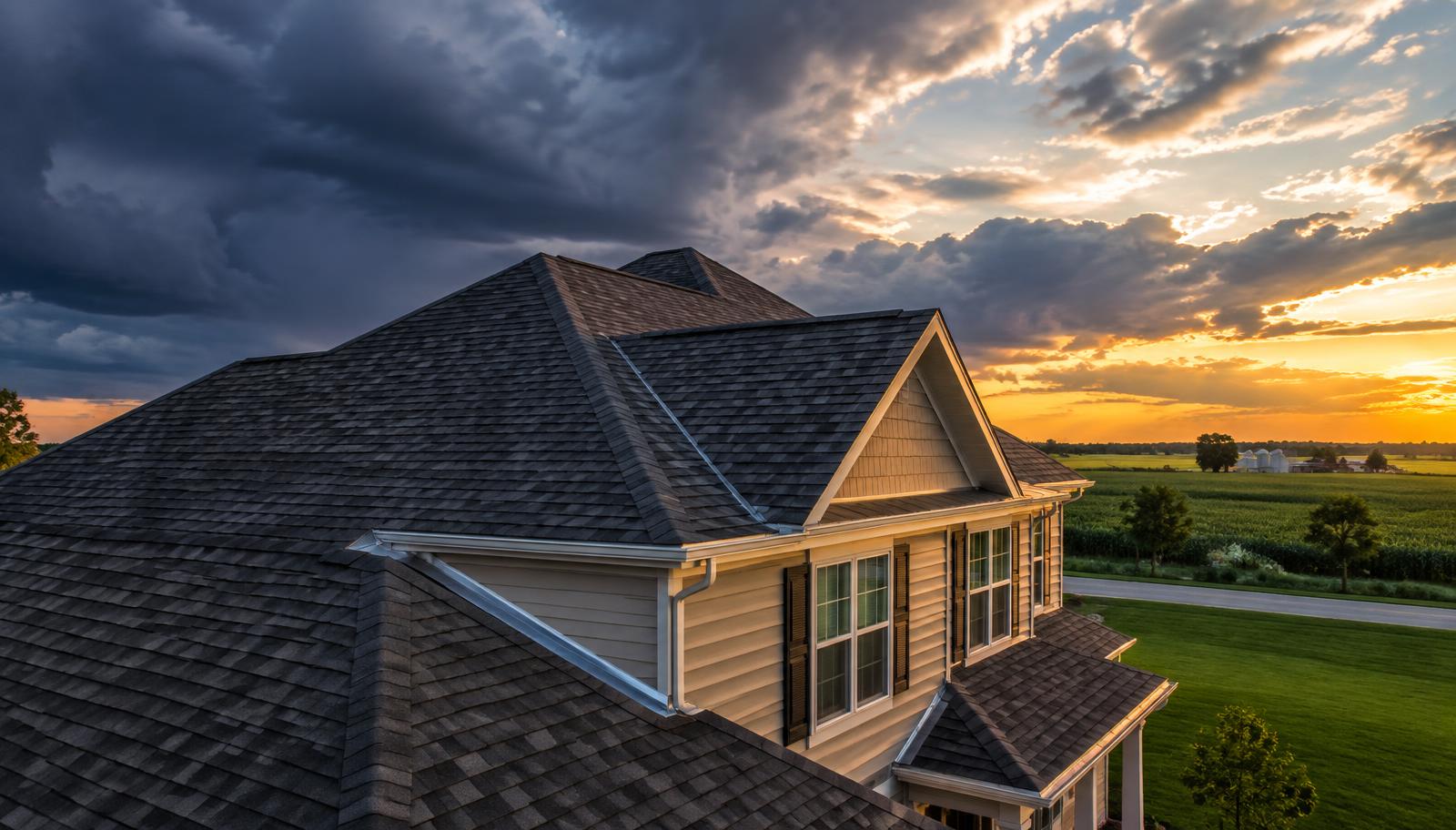
Blue Mound sits among wide farm fields. Ridge caps and roof edges take the hardest wind, so check them first after a storm.
Hail checks after summer storms
Hail can bruise shingles without making a leak right away. Dents on gutters, vents, and car hoods are a sign to have the roof looked at.
Getting help from Blue Mound
Blue Mound requests go to the local roofing partner that serves the Decatur area.
Why ventilation matters more on exposed, open-field homes
A roof that sits out in open farmland takes more direct sun and wind-driven temperature swings than one tucked among trees and other buildings. Without balanced intake and exhaust ventilation, attic heat builds up in summer and can accelerate shingle aging from underneath, while winter moisture can condense on cold decking if warm, humid air collects in the attic.
Ice damming on an exposed roof
When snow melts unevenly over a warm attic and refreezes at the cold eaves, it can back water up under the shingles. Homes with poor attic ventilation or low insulation are more prone to this than well-vented ones, and the fix usually starts with checking soffit vents, ridge vents, and insulation levels rather than only the shingles themselves.
Signs your attic is not venting well
A few clues point toward ventilation problems rather than a simple leak:
- Frost or moisture on the underside of the roof deck in winter
- Uneven snow melt pattern across the roof
- Musty attic smell or visible mold on rafters
- Shingles that look prematurely worn compared to their age
- Ice buildup along the eaves after a snow and thaw cycle
How wind and hail still factor in
Blue Mound's open surroundings mean storm wind reaches roofs without much to slow it down, so ridge caps, exposed edges, and loose flashing are worth a look after any strong front moves through. See how a storm damage check differs from a routine inspection if you are not sure which you need.
What a ventilation and ice-damming check includes
A roofer will typically look at soffit and ridge vent airflow, insulation depth and coverage, signs of past ice damming at the eaves, and whether ice and water membrane is present in vulnerable areas. This is different from a storm inspection, which focuses on wind and hail impact rather than airflow.
Fixing ventilation versus a full re-roof
Adding or upgrading ridge and soffit vents, or adding insulation, can often be done without touching the shingles, and it is usually far less costly than a full replacement. If the shingles are already worn out from years of heat stress, a roof replacement may be the better long-term fix since ventilation upgrades can be built in at the same time.
Process from request to finished work
A Blue Mound request is routed to the local roofing partner serving the Decatur area. From there: an inspection, a plain description of what was found, repair or replacement options, a written estimate, scheduling, the work, cleanup, and a walkthrough.
Temperature swings and shingle performance
Central Illinois sees wide temperature swings across a single season, and sometimes within a single week. Shingles expand and contract with those changes, and on an older or already-stressed roof that movement can work at nail heads and seal strips over time. Pairing good ventilation with periodic inspection helps a roof handle those swings better over its lifespan.
A seasonal self-check you can do from the ground
Between professional inspections, a simple seasonal look from the ground can catch early warning signs: uneven snow melt in winter, visible sagging along the roofline, granules collecting at downspouts, or daylight-colored patches where shingles may be missing. None of these confirm a diagnosis on their own, but they are good reasons to request a closer inspection.
Questions worth asking before a ventilation upgrade
Before agreeing to any ventilation work, it helps to ask what specifically will change, how the new intake and exhaust will balance against each other, and whether the fix addresses the insulation level as well as the vents themselves. A roofer should be able to explain, in plain terms, why the proposed change should reduce the heat or moisture problem you are seeing rather than just adding vents for their own sake.
Maintaining ventilation after the work is done
Once new vents or added insulation are in place, a yearly glance from the attic access can confirm vents have not been blocked by insulation shifting or stored items, and that soffit vents are not covered by exterior debris or paint. Pairing that check with a look at roofing warranty terms helps you know what, if anything, is covered if a ventilation component fails early.
Mistakes to avoid when fixing a ventilation problem
Adding exhaust vents without matching intake, or the reverse, can make airflow worse rather than better, since the two have to work together to move air through the attic properly. Another common mistake is treating insulation and ventilation as separate projects when they are closely related; blocking a soffit vent with insulation that has shifted can undo the benefit of an otherwise good ridge vent installation. A roofer addressing one should generally check the other.
Common questions
How do I know if hail hit my roof?
Look for dents on soft metal like gutters and vents. A roofer can check the shingles up close.
Can poor attic ventilation really shorten shingle life?
Trapped summer heat can accelerate shingle aging over time, and uneven winter conditions can contribute to ice damming. A roofer can check whether your attic airflow is balanced.
I see ice buildup at my eaves every winter. Is that normal?
Occasional minor icicles are common, but repeated heavy ice damming is usually a sign of attic heat loss or ventilation imbalance worth having checked.
Does adding ridge vents mean cutting into my existing roof?
Yes, ridge vents require cutting a slot along the ridge, which is typically done during a re-roof or as a standalone ventilation upgrade.
How much insulation is enough for a central Illinois attic?
It varies by home and is usually discussed in terms of energy and moisture goals rather than a single number; a roofer or insulation contractor can assess your specific attic.
Will a soffit vent upgrade help with wind-driven rain too?
Soffit vents are built with baffles to resist wind-driven rain intrusion, but a poorly installed or damaged vent can let water in, so condition matters as much as presence.
Is Blue Mound covered by the same roofing partner as Decatur?
Yes, requests from Blue Mound are routed to the local partner serving the Decatur area.
Get a Roof and Attic Ventilation Check for Your Blue Mound Home
Describe it in the form and a local roofing partner will help you sort it out.